
For years, resilience was treated as a specialist conversation. Something to revisit after a storm, wildfire, flood, or outage. That mindset no longer matches the pressures facing owners and project teams.
In this issue, we explore why resilient design must begin early, how teams can assess exposure, and how proactive strategies can reduce risk while strengthening long-term performance for communities and owners.
We’re excited to share it with you. Enjoy!
In the Pacific Northwest, resilient design starts with a blunt reality: many buildings are well matched to the average day and poorly matched to the disruption day.
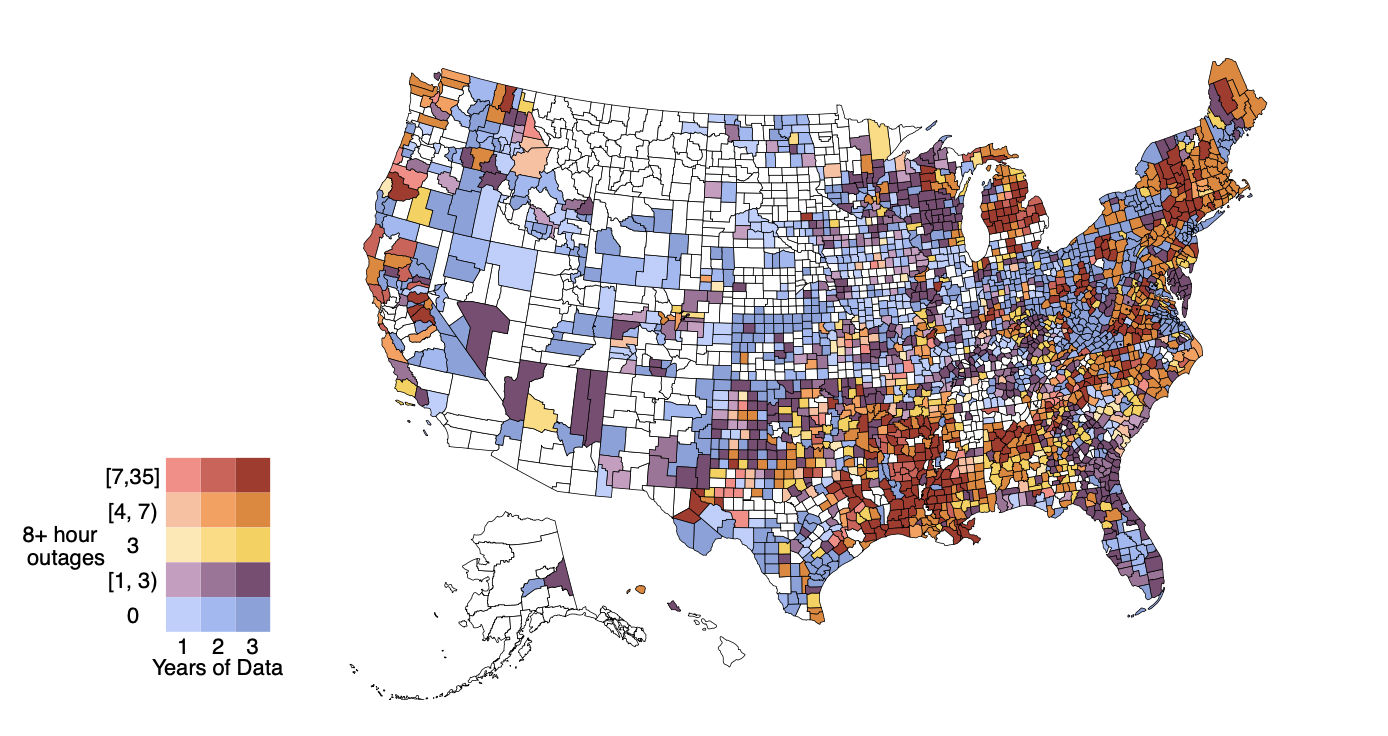
That gap shows up fast in this region. A winter storm knocks out power, and an all-electric building loses heat with it. Wind takes down distribution lines, and a facility that looked reliable on paper goes dark. Roads ice over, and the problem is no longer just the building system failure; it is the fact that repair crews, first responders, or occupants may not be able to move at all. In the built environment, resilience here is less about dramatic catastrophe than about what happens when ordinary systems fail in a place that is only intermittently stressed but highly exposed when that stress arrives.
That is what makes the Pacific Northwest a distinct design problem. The region often sits in a middle zone: hazards are serious enough to matter, but not frequent enough to make every owner eager to consider in the upfront cost of resilient design. The result is a built environment that can be surprisingly vulnerable precisely because the risks do not feel constant.
Key Risks in the Pacific Northwest
For designers and owners, the most useful framework is not simply “what hazards exist?” It is “what hazards create the most building-level risk?” That means looking at both magnitude and frequency.
The high-magnitude risk in the Pacific Northwest is extreme cold and ice. These events may be infrequent, but they hit the built environment hard. Roadways become inaccessible. Power outages stretch longer because restoration is harder. And because Washington and Oregon rely so heavily on electric heating, a cold-weather blackout can shut off both electricity and space heating at once. In building terms, that is a cascading failure: power loss becomes a thermal comfort problem, then a safety problem, then an operational problem.
The more common risk is the wind-driven outage. In many Pacific Northwest communities, the grid’s weakness is not generation so much as distribution. Overhead lines move through trees, hills, and constrained access routes. Outages may be shorter and less dramatic than an ice storm, but they happen often enough to shape design decisions for facilities that cannot afford repeated interruptions.
Deciding What a Resilient Building Actually Needs
Not every building needs to do everything. The smartest resilience plans usually begin by identifying critical needs rather than trying to harden every system equally.
That is a much more useful question for the built environment: What has to stay on for this building to remain functional?
On a college campus, that may not mean every classroom stays fully operational. It may mean dorms remain habitable, dining stays online, and core communications work. Once those priorities are defined, resilience planning becomes more targeted. That is when decisions about envelope upgrades, HVAC filtration, backup power, or a full microgrid start to make sense in proportion to the actual mission of the facility.
This also helps explain why resilience looks different by sector. A government building may justify a highly redundant system because interruption is unacceptable. A school or civic portfolio may need something more selective. In either case, resilient design works best when it is tied to building function, not an abstract idea of “preparedness.”
key systems to consider
In the Pacific Northwest, resilient building systems rarely come down to one silver bullet. The stronger strategy is usually layered.
One effective model is what could be called pragmatic resilience: use battery storage and PV to cover the vast majority of routine outages, then keep a smaller fossil-fuel generator for the true edge case. In that sequence, the battery and solar system handle the everyday disruption profile, while the generator is reserved for the black-swan event. That can dramatically reduce the size and cost of the battery system compared with designing for the single worst day.
That matters in this region because solar economics are not uniform. Seattle and Portland do not offer the same solar profile as California, while eastern Oregon and Washington can be much more favorable. But even where the solar margin is smaller, on-site energy can still provide building-level value during normal operations by offsetting electricity costs and acting as a hedge against a less reliable, more expensive grid.
The more important point is that resilient systems should match the outage profile the building is actually likely to face. A design that covers 95 percent of disruptions, then uses a smaller backup layer for the last 5 percent, is often a better built-environment solution than one oversized system attempting cover all potentials at the same time.
What Low-Cost Moves Can Make Buildings More Resilient?
Not every resilience investment is a major capital project. Some of the most useful moves are operational.
Temporary generators can be deployed strategically across a portfolio instead of purchasing permanent backup systems for every facility. Written emergency procedures can protect buildings almost as effectively as equipment in the first hours of a disruption: who shuts down what, who calls the utility, where occupants move, which spaces stay operational. Prearranged fuel agreements and utility partnerships can also reduce downtime dramatically because they replace improvisation with sequence.
That is especially important for public portfolios. A library system, municipal network, or campus may get more value from strengthening a small set of buildings into community resilience hubs than from trying to make every facility self-sufficient. In those cases, the building becomes part of a larger operational strategy: a place for heating, cooling, charging, and continuity when surrounding systems fail.
Why Is Resilient Building Design Becoming More Urgent Now?
Because the building case is no longer only about emergencies. It is increasingly about economics.
Electricity prices are rising. Time-of-use pricing is spreading. Utilities are offering more grants and incentives for batteries and microgrids because reducing peak demand can be cheaper than building new generation. That means resilient building systems can now do double duty: save money during normal operation and provide backup during disruption.
At the same time, the region’s future hazard profile is getting harder to model from historical averages alone. Weather is more volatile. Snowpack swings. Heat events and wildfire impacts are growing less predictable. For buildings, that means resilience cannot be based only on what used to happen. It has to be based on what future conditions are likely to demand from mechanical systems, electrical infrastructure, and operations planning.
In the Pacific Northwest, resilient design is not about turning every building into a fortress. It is about closing the gap between what a building is designed to do on a normal day and what it must keep doing when the day comes that the systems around it stop behaving normally.
Southern California projects are being shaped by a specific set of environmental pressures: extreme heat, wildfire smoke, drought, water reliability, grid instability, longer outages, and seismic risk. The takeaway from Simon Ubhi’s state-of-the-market perspective is that resilience can’t be treated as a generic add-on or a single-system solution. It has to be defined early, tied to the facility’s actual risks, and coordinated across disciplines.
How should projects in this region be approaching these challenges? Is there anything we’re missing?
Projects in Southern California should begin by naming the hazards they are actually designing for. The region’s challenges are not abstract: heat waves drive cooling demand, strain the grid, and create indoor health risks during outages. Wildfire and smoke events affect air quality, ventilation, filtration, and operational continuity. Drought and water reliability constraints create additional pressure, especially where fire response water is part of the resilience strategy. Grid reliability issues, including Public Safety Power Shutoffs and longer-duration outages, challenge the idea that standby generation alone is enough. Seismic risk adds another layer, particularly for facilities that need to maintain critical services or restart quickly after an event.
Our approach is to bring resilience context into every applicable project and promote those considerations with stakeholders as early as possible. Ideally, that happens during scope development. But the key point is that it is never too late to raise resilience questions if they have been missed. The goal is not to make resilience a separate conversation. It is to make it part of the project’s basic definition of performance.
That means resilience should be understood as more than backup power. A generator may be part of the answer, but it does not address the full risk profile of Southern California projects. Resilience has to be multidisciplinary. It can include water storage for firefighting, HVAC strategies such as chilled water connections for temporary chillers, and other discipline-driven planning measures that help a facility remain safe, functional, or recoverable during disruption.
In practical terms, Southern Region projects should:
- Define the hazard set early. Projects should identify which risks matter most: heat, smoke, outage, seismic, water, or a combination of these.
- Identify critical functions and acceptable downtime. Teams should clarify what the facility must continue to do during a disruption and how long it can tolerate reduced operation.
- Build for passive survivability where possible. Shade, envelope performance, and thermal comfort strategies can help a building remain safer during an outage.
- Plan for longer-duration outages with layered strategies. This may include right-sized standby power, PV plus storage where feasible, load shedding, and prioritization of critical loads.
- Address smoke season explicitly. Filtration strategy, outdoor air controls, and operational modes for sheltering should be part of the design conversation.
- Design MEP systems for recoverability, not just protection. Clear restart sequences, accessible isolation, maintainable equipment layouts, and a spares strategy can help facilities recover faster.
- Make resilience operational, not only capital. Owner training, emergency operating modes, and clear triggers for switching modes are part of the resilience plan.
The practical shift is from asking, “What backup system do we need?” to asking, “What does this facility need to keep doing, what conditions could interrupt that, and how do we design across disciplines so it can respond?”
What are we missing?
The common gap in adoption is the business case.
Resilience often adds first cost, and project teams need clearer ways to explain why that investment matters. The financial argument cannot stop at the cost of the resilience measure itself. It also needs to account for the cost of consequences: what happens when a school, hospital, or campus community experiences downtime, disruption, or loss of critical services?
That question is central because resilience value is often clearest during an event. If the project team cannot define what downtime costs, it becomes harder to justify the upfront investment. For some owners, the consequence may be operational disruption. For others, it may be the loss of critical services, reduced safety, interrupted learning, or the inability to support a campus community during a regional emergency.
The missing piece is not only technical. It is financial and strategic:
- What does downtime truly cost?
- Which functions are most important to protect or restore?
- What level of resilience is appropriate for the owner’s mission?
- How can the project team compare first cost against avoided consequences?
This is where resilience needs to be translated into owner-specific value. A school, hospital, or campus may each understand downtime differently. The business case has to reflect that difference.
What are the key things going well in this region? Where are the tailwinds?
There are several positive forces in the Southern California market.
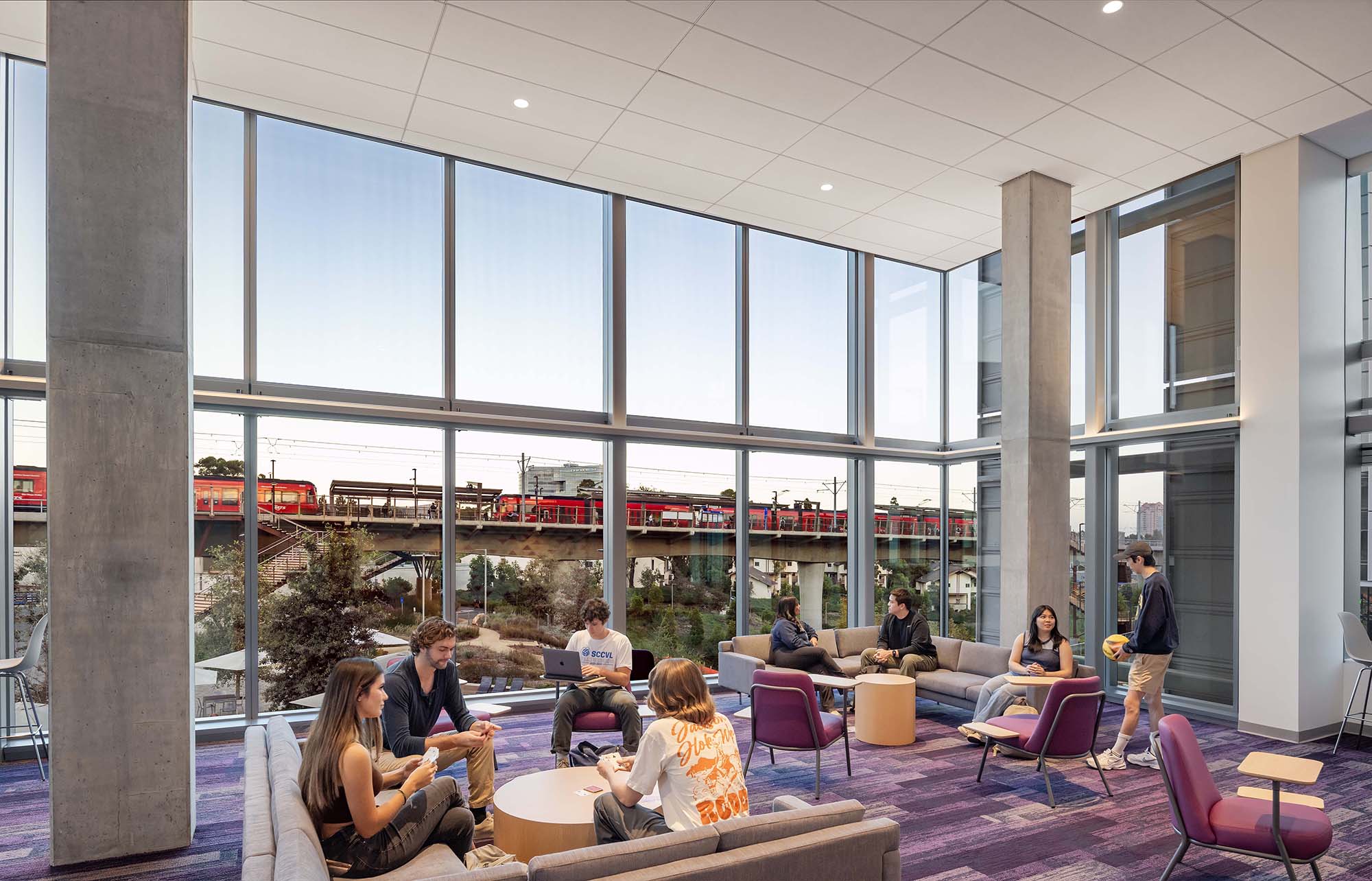
First, owners and districts have recent lived experience with the risks. Heat, smoke, and outages are no longer distant scenarios. Because many stakeholders have experienced these disruptions directly, resilience conversations land faster than they used to. The market does not need as much convincing that these hazards matter.
Second, electrification and decarbonization work is accelerating. That creates an opening for resilience upgrades because systems are already being evaluated, modernized, or replaced. When projects are changing how buildings use energy, support loads, or plan for future operations, resilience can be integrated into that work rather than treated as a separate effort.
Third, many clients are becoming more open to campus-wide thinking. Instead of looking only at individual buildings, owners are considering central plants, distribution, and microgrid readiness. That broader view is important because many resilience strategies work better at a campus scale, where teams can think about shared infrastructure, critical loads, and long-term flexibility.
The tailwinds in the region include:
- Recent lived experience with heat, smoke, and outages. Owners and districts understand the risks more directly than they did before.
- Momentum around electrification and decarbonization. Modernization projects can create opportunities to incorporate resilience improvements.
- Increased openness to campus-wide planning. Clients are more willing to consider central plants, distribution strategies, and microgrid readiness rather than staying in single-building silos.
Taken together, these forces are changing the resilience conversation. Southern California projects are being pushed by real hazards, but they are also benefiting from owners who better understand the risks, systems that are already being modernized, and a growing willingness to think beyond one building at a time.
That is the state of the market: resilience is becoming more practical, more multidisciplinary, and more closely tied to how buildings actually need to operate in Southern California.
For years, resilient design in the built environment was treated as a specialist conversation. Something to revisit after a major storm, wildfire, flood, or power outage. However, mindset no longer fits the reality project teams and owners face today.
The built environment is under pressure from more frequent and severe climate events, aging infrastructure, utility instability, and growing demands on health, safety, and continuity. In that context, resilient design is no longer a premium feature. It belongs in the basis of design.
At its core, resilience is the ability to prepare and plan for disruption, absorb impact, recover function, and adapt over time. That definition matters because it shifts the conversation away from one-off protective measures and toward long-term performance. A resilient building is not simply hardened against a single event. It is designed to keep people safe, support operations, protect assets, and remain useful in changing conditions.
When Resilient Design Should Begin on a Project
That distinction is important because resilient design is often reduced to backup generators and emergency power. Those systems are often essential, but a resilient approach needs to be more holistic. It can include onsite water storage to support firefighting, HVAC strategies that allow temporary cooling connections, passive survivability measures, flood protection, thermal comfort during outages, and planning for continuity across electrical, mechanical, plumbing, enclosure, and operational systems. In other words, resilience is not a single system decision. It is a multidisciplinary design approach.
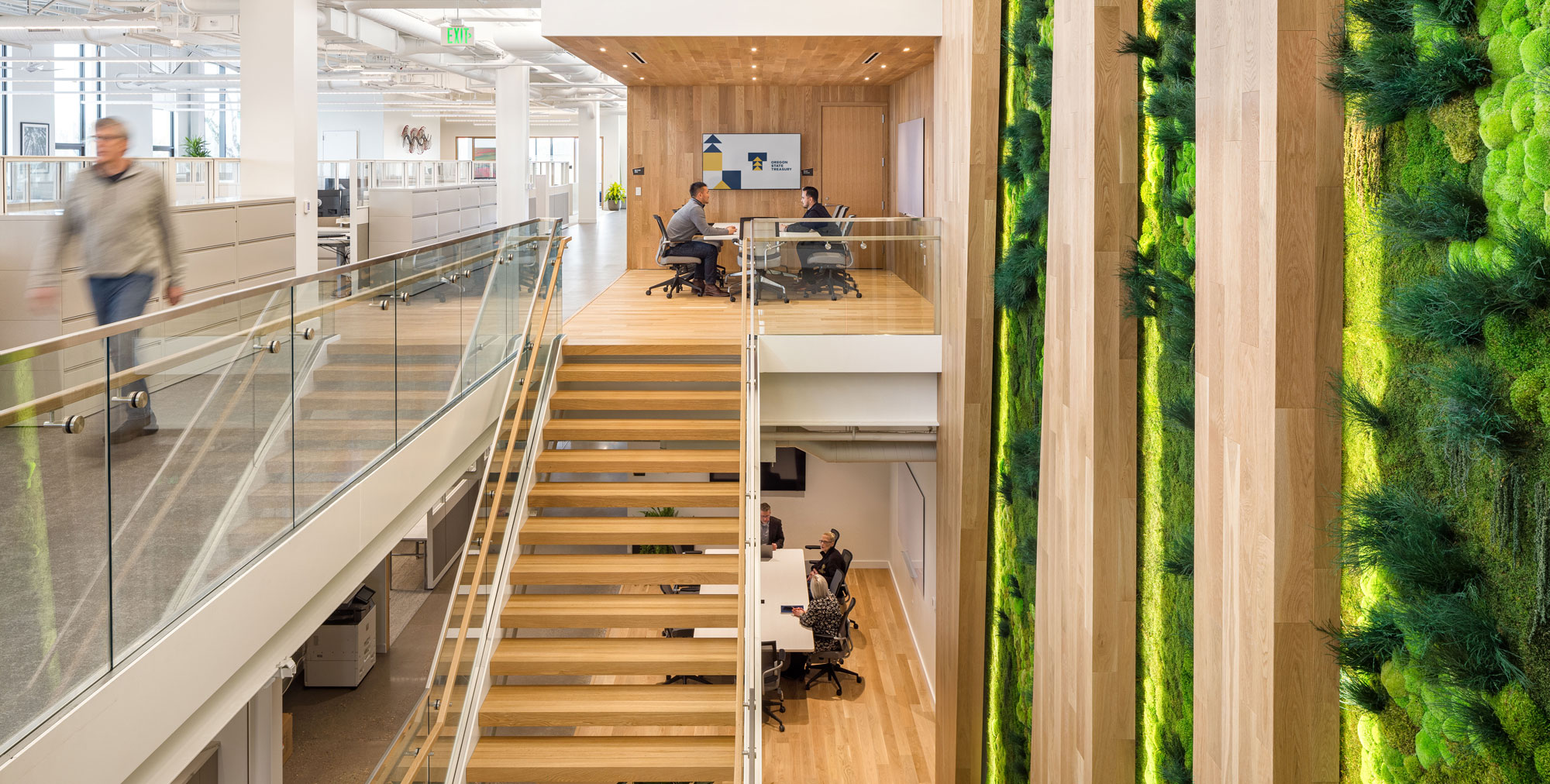
Project Highlight: Oregon State Treasury HQ
Just as importantly, resilient design should begin early. The best moment to discuss it is during scope development, when teams can align hazards, priorities, and investment with project goals. Waiting until late design; or worse, until after a disruption; narrows options and raises cost.
Where to Start with Resilient Design: A Study of Exposure
A practical approach starts with exposure. What are the top local hazards most likely to threaten safety, operations, or asset value? In one region, it may be wildfire smoke and grid instability. In another, flooding and extreme heat. From there, teams can evaluate mitigation options using resources such as the Department of Energy’s Technical Resilience Navigator, NOAA’s U.S. Climate Resilience Toolkit, and local hazard mitigation plans. The goal is not to create fear. It is to make risk visible, specific, and actionable.
This can make resilience seem like an added cost. But the more useful framing is avoided loss. Power interruptions, system failures, and water disruptions can carry operational, financial, and human consequences that far exceed the cost of proactive measures.
A recent U.S. Chamber of Commerce finding shows that every $1 invested in resilience can yield $13 in avoided economic impact and cleanup costs. That is a compelling return, but the business case is only part of the story. In healthcare, housing, education, and community-serving buildings, resilient design can also preserve safety, dignity, and continuity when it matters most.
$7 + $6 = $13
The US Chamber calculates that $7 of savings for economic costs, in addition to the $6 of savings for damage already assumed in its model. Combining the two ratios finds that every $1 invested in resilience and disaster preparedness saves $13 in economic impact, damage, and cleanup costs after the event. From: US Chamber of Commerce
The industry imperative is clear: resilient design must move from optional conversation to standard practice. Not because every project needs the same solution, but because every community faces risk, and every project deserves a design process that acknowledges it. The most effective resilience strategies are not generic checklists. They are locally informed, interdisciplinary, and tied to the outcomes owners and occupants rely on every day.
That is the position we believe the industry should take now: resilient design is fundamental to sustainable design, to responsible engineering, and to creating buildings that are prepared not just for today’s pressures, but for tomorrow’s realities.
As the U.S. building stock continues to grow, so do the risks of climate impact.
As “Engineers for a Sustainable Future,” we understand that technological advancements are forging a clean and resilient future at a pace never seen. And we understand that we are exceptionally positioned to have a measurable impact on carbon reductions through our innovative engineering and consulting.
Now is the time to take a larger share of our projects beyond code and take a holistic look at carbon and human health for all. Codes are ramping up, governments are implementing new policy, and climate change continues to threaten our health and livelihood.
To stay ahead of the market change and adapt to new climate conditions, we need to make deep energy and carbon reductions a best practice on our projects. And we need to prove performance through transparent building reporting and measurable, improved progress.
This is why Glumac’s Executive Leadership, Engineering Services, and Building Sciences Groups came together to develop our Climate Commitment Action Plan. In it you’ll find concrete steps we’re taking for achieving our AIA 2030 and Carbon Leadership Forum MEP 2040 commitments, improving our design processes, and industry outreach and advocacy we undertake.
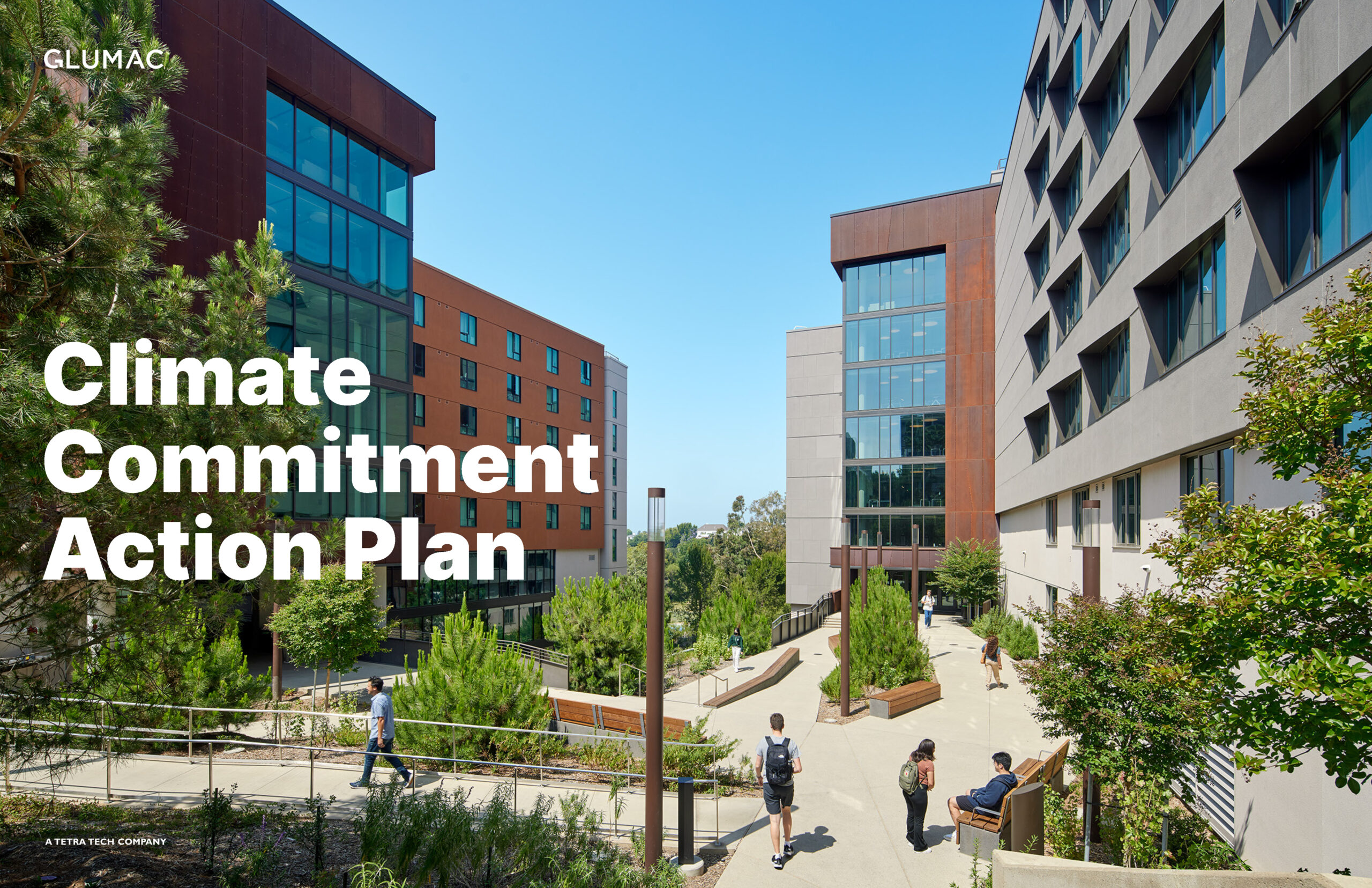
In 2018, Glumac began work on a strategic road map for the California State University system that supports decarbonization efforts across its 23 campuses. With the overall of providing a pathway to carbon neutrality, this design standard provides guidelines for the university and its staff to decarbonize the operation of all its facilities.
Since then, we’ve grown this portfolio of work across the US, including work with the University of Colorado, Boulder, and George Mason University.
We sat down with Reese Netro, a sustainability strategist with Glumac, to learn more about what exactly goes in to decarbonizing an entire university system.

Reese Netro | Glumac
As Sustainability Strategist at Glumac, Reese supports USGBC LEED, Living Building Challenge, WELL, and Fitwel green building certifications from initial to final stages. She also works to integrate sustainability strategies on projects in collaboration with interdepartmental staff.
Nvidia’s groundbreaking H200 GPU chip is setting new standards with double the speed of its predecessor, the H100. This unparalleled performance upgrade, however, forces designers to grapple with a considerable increased energy demand.
The data center world, which collectively contributes nearly 4% to global energy consumption, currently relies heavily on air cooling. Enter forward-thinking solutions such as evaporative cooling, which presents as much as a 20% reduction in energy usage. Yet, this energy-conscious approach brings about its own challenge – a massive amount of water consumption.
Anticipating a greener future, data center design is pivoting toward liquid-cooled server technology. Liquid-cooled AI servers, boasting a capability of a billion calculations per second, could mark a monumental leap forward in sustainable technological advancement. Join us in an exclusive webinar where we venture into the intricate landscape of AI data centers.
In our latest webinar, we’re joined by Dave Martinez of Sandia Labs and Steve Harrington of Chilldyne to unravel this tapestry of technological advancements, navigate environmental considerations, and explore collaborative solutions shaping the sustainable future at the intersection of AI and data centers.

Dave Martinez | Sandia National Labs
David Martinez is the Engineering Program Project lead at Sandia National Labs Corporate Computing Facilities (CCF). David has in depth understanding of HVAC controls, IT, Facility hardware implementations, and is widely viewed as a DOE resource for both air and liquid cooled data center deployments.

Dr. Steve Harrington | Chilldyne
In 2011, Dr. Harrington founded Chilldyne to bring his engineering, fluid dynamics, and electronics cooling expertise to the data center. His personal goal is to reduce energy consumption and the carbon impact of data centers globally by deploying liquid cooling to as many servers as possible through widespread adoption of liquid cooling .
Recently, Michael Adams of Glumac’s Energy team sat down with HMC Architects to discuss the impacts of Title 24 code updates on the design of education spaces. His interview is reproduced here with HMC’s permission.
Every three years, the California Energy Commission (CEC) updates its section of the Building Standards Code, Title 24 Part 6 – California Energy Code, by working with stakeholders in a public and transparent process. The updated 2022 Code took effect on January 1, 2023. The goal is to improve efficiency and reduce emissions from California homes and businesses, which represent 70 percent of the state’s electricity use and are responsible for a quarter of the state’s greenhouse gas emissions.
Nationally, California is a leader in environmental standards, and Title 24 is one of the tools state leaders use to push the envelope. The Title 24 Building Standards Code dates back to 1978, when previously disjointed building regulations were unified, covering all aspects of building construction. As climate change and greenhouse gas emissions have become pressing issues, energy use and emissions standards have become more critical.
As we adopt the 2022 code, there are several changes school districts, architects, and engineers need to understand better. We talked with Michael Adams, CEA, LEED AP BD+C, to get answers and some perspective. Michael is an associate and senior energy analyst at Glumac; a global engineering firm focused on creating sustainable, resilient buildings that provide healthy, productive, and equitable spaces for all communities. Glumac is an engineering partner on many HMC projects.
What are the noteworthy changes to the Title 24 energy code?
One of the significant changes is a prescriptive requirement for solar photovoltaic and battery storage systems for most non-residential new construction building types (Section 140.10). The amounts are based on a project’s conditioned square footage or available roof area (calculated as Solar Access Roof Area – SARA). Although a prescriptive requirement only, it will make it difficult for applicable buildings to meet Title 24 compliance via the performance approach without any renewable/battery storage systems in their design.
For non-residential projects, there are various improvements to performance requirements for the envelope, mechanical, lighting, and plumbing systems. A few of the more notable changes include:
- Increased prescriptive insulation requirements on metal-framed exterior walls
- High prescriptive glazing performance (U-Value and SHGC) with new climatezone-specific requirements
- Reduced prescriptive lighting power density (LPD) requirements
- Increased mandatory mechanical system efficiencies
- Increased prescriptive requirements on airside economizers on smaller systems (some exceptions)
- Prescriptive mechanical system type requirements (heat-pump based) for some program and building types
- High mandatory insulation performance requirements for envelope systems in alteration/addition projects
What are the impacts and cost implications of the updated energy regulations?
The photovoltaic/battery and higher performance standards requirements will increase first costs (the initial cost to construct). We expect that there will be lower energy use intensity (EUI), lower greenhouse gas emissions, and lower utility bills throughout the life of the building.
Additionally, these code changes will push more projects to consider energy use holistically, modeling actual predicted energy use rather than checking the boxes on a list of different components that must meet minimum requirements. This will require an increased understanding and knowledge of the Title 24 Part 6 energy code.
Read More at hmcarchitects.com
Indoor air quality has a major role to play in resilient building design. As the COVID-19 pandemic and the growing presence of climate-related disasters converged in recent years, the need for our indoor spaces to keep us safe, together, and working has become more apparent than ever. Recently, we were joined by Dr. William Bahnfleth of Penn State University for a discussion digging into ASHARE’s groundbreaking new Standard 241, which addresses these issues head on. Dr. Bahnfleth shares insights drawn from helping develop the standard and illustrates its potential to create built environments that are safer and more resilient to a changing climate.
On the webinar below, you’ll also hear from Chris Rush of our partner firm Hoare Lea. An expert in indoor air quality, Chris provides a guide for making resilience a reality on our projects. And lastly, Erik Malmstrom of SafeTraces provides a look at how their technology helps us quantify the impacts of healthy building design, to ensure design intent becomes reality.
Presenters

Dr. William Bahnfleth | Penn State University
Dr. Bahnfleth is a Fellow of ASHRAE, the American Society of Mechanical Engineers, and the International Society for Indoor Air Quality and Climate. Dr. Bahnfleth is the author or co-author of more than 170 journal articles and 14 books/book chapters.

Chris Rush | Hoare Lea
As Air Quality Group lead at Hoare Lea, Chris focuses on promoting the crucial role indoor air quality plays for our health and wellbeing, and examines the opportunity buildings play in delivering better health outcomes for occupants.

Erik Malmstrom | SafeTraces
The CEO of SafeTraces, a Bay Area-based technology company and leader in DNA‑enabled diagnostic solutions for indoor air safety, Erik is a successful and experienced thought leader driven to create a better, safer, more sustainable world.
We’ve discussed building embodied carbon a lot at Glumac, stating its overall necessity as part of a global carbon drawdown, strategies for reducing it in new buildings, and even the impact material choices have on a building’s life-long carbon footprint.
And that materials challenge looms large. Though many manufacturers still do not disclose the embodied carbon of their products, the most progressive manufacturers that supply the major materials buildings use – concrete, steel, and wood – is where the lion’s share of good data lies, and where the focus of our work is with our clients. But even so, it is difficult to make building specifications meaningful because with the lack of data, you run the risk of being too aggressive, or too lax, because materials are regionally and market sector sensitive.
Senior Sustainability Strategist Ante Vulin provides context into the global impacts of a building’s embodied carbon.
So where can we work and have the most impact under these conditions? The answer may be large-scale adaptive reuse. There is a big opportunity in front of building designers to avoid carbon emissions by making our existing building stock a larger part of the climate solution.
We recently had the pleasure of working with the State of California’s Department of General Services on its Resources Building Renovation in Sacramento. As part of the of this renovation of this 652,000-square-foot building, the steel structure, and steel deck and concrete floors will be retained. The structural reuse alone reduces its embodied carbon intensity by 65% over typical new construction. This demonstrates the power of reusing existing buildings in avoiding carbon emissions on a large scale, as there is so much embodied carbon tied up in the production and delivery of concrete and steel.
Chief Sustainability Strategist Nicole Isle diagrams carbon savings through adaptive reuse.
What about new construction?
Inroads to carbon reduction through smart material choices can still be made for new construction projects. The structural strategies available to reduce embodied carbon are simple, can be cost neutral, and the amount of good data available for market ready alternatives is most robust for these materials. For example, the all-new Clifford L. Allenby building achieved a 15% reduction in embodied carbon of the entire structure and envelope through the concrete mix alone.
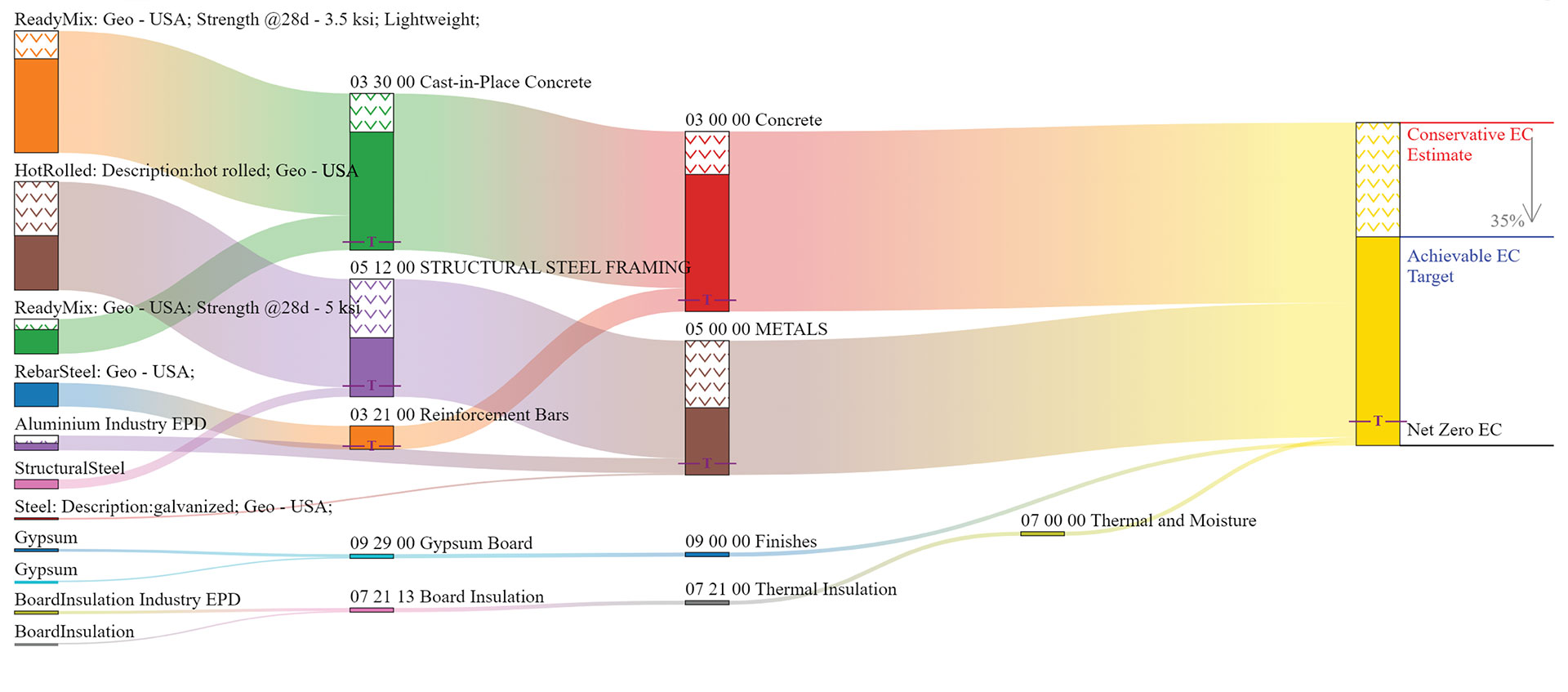
This Sankey flow diagram is a model output of a new construction office building we are currently working on. On the left side, it shows the materials with the highest potential to reduce embodied carbon. Again, concrete and steel are the biggest culprits by volume. And looking all the way to the right, market ready low carbon alternatives can potentially reduce the embodied carbon of this building by 35%.
The potential is growing for carbon reduction across building market sectors. Let’s chat about your next building, campus, or real estate carbon reduction project!
This post was made in part of a series along side our partners in Tetra Tech’s High Performance Buildings Group.
You can read the rest of the group’s posts here.
COP27 is focused on action this year. As global leaders gather, the priorities to are twofold: accountability, and; solutions to implement now.
Accountability
Loss and damage negotiations are taking centerstage. Negotiations on how much nations should pay in loss and damages is an important topic, as well as the assistance needed to help the poorest countries transition to renewable energy. These conversations are timely with the re-entry of oil and gas companies, which were banned from COP last year. Given their record profits, largely due to the Ukraine crisis, leaders are pressing for a windfall tax to shift profits to aid global inequities, while acknowledging it’s time for governments to deliver on climate finance commitments.
Solutions
COP27’s Decarbonization Day focused on technologies that are emerging as potential solutions to help nations achieve their Nationally Determined Contributions (NDCs), and businesses to achieve their climate goals. The day provided an opportunity to discuss approaches and policies and showcase technologies that facilitate the transition towards a low carbon economy.
Discussions trended toward decarbonizing high-emitting sectors, namely oil, gas, steel and cement, which represent more than a quarter of global CO2 emissions. American President, Joe Biden, rallied 122 countries to join the Global Methane Pledge, aiming to reduce emissions by 30% by 2030.
In oil and gas, the following was explored:
- best practices to end methane venting and flaring and cut methane leaks in operations
- methods to improve energy efficiency, use renewable power and Carbon Capture, Utilization and Storage (CCUS).
Further topics included low carbon steel and cement and adopting circular economy approaches to reduce needs for new materials, while recognizing the importance of these products for improving infrastructure in developing nations across Africa and the Global South.
The ‘Breakthrough Agenda’
Nations representing over half the world’s GDP, including the United States and the United Kingdom, unveiled a one-year plan with 25 collaborative actions to be delivered by #COP28 to help make clean technologies cheaper and more accessible everywhere.
“Fossil fuels are a dead end. We need to increase renewable energy deployment to around 60% of total energy capacity over the course of the next eight years, which means roughly a tripling of install capacity over the course of this decade.” United Nations Chief António Guterres has said.
And, as the UN expressed in an article last week, this is more than possible, because the world has tripled its renewable energy capacity over the last decade. We just need to do it again, as Guterres has expressed: “The technologies are there, the finance is there. It just needs to be deployed in the right place, where the emissions are and where the population growth and energy demand is.”
The climate provisions in the recently passed Inflation Reduction Act (IRA) are substantial. The sustainable design community’s advocacy efforts and demonstrated projects promoting efficient, low carbon, resilient and healthy buildings has finally manifested into U.S. policy creating new climate funding resources and extending existing programs. For a quick understanding of IRA’s climate provisions, we like this USGBC summary.
At Glumac, we helped design the largest net zero government office in California, demonstrated the sustainable ROI in developer lead projects in Texas, and improved the resilience of the Oregon State government. And, there is a rise in climate action from campuses and governments as our work on building and transportation decarbonization and clean energy plans continues to grow. Looking ahead, we are anxious to see how this new climate funding spurs broader market uptake especially at scale with the larger building portfolio owners.
Glumac’s Building Sciences Group, made up of our sustainability, energy, and commissioning experts, is leading the charge informing our MEP staff and our clients on the benefits of the new legislation. Looking ahead, we’re confident that the rapidly growing number of requests we are receiving for efficient and low carbon buildings, new and existing, will continue.
The bill is meant to put the U.S. on the path to reduce GHG’s 40% by 2030 and make energy efficiency and clean energy increasingly more cost effective year after year. What’s more, the IRA will undoubtedly sweeten the ROI for smart, sustainable buildings. We are thrilled by this massive boost in federal support and we have a renewed sense of purpose and pride in the work we do alongside our client owners, developers, and design partners. Let’s keep going!
For our latest installment in our Data-Driven Design Series, we spoke with Jon Robertson, Glumac’s Lone Star Region Plumbing Manager, about strategies for reaching net zero water and how we’re improving the water efficiency of our projects.
Water reuse and conservation is a major aspect of resilient design in the face of climate change. In this video, Jon discusses strategies he’s implementing on projects today that are improving the capture and reuse of greywater, the efficiency of systems, and the overall reduction in the waste of potable drinking water.
Visit Glumac’s Vimeo to follow the rest of our Data Driven Design Series.
&nspb
While a lot of attention is paid to the role transportation plays in the massive carbon draw down necessary to mitigate the worst effects of climate change, designers in the built environment actually have a much larger piece of the carbon pie to slice: Building materials.
Expanded public transit and electric vehicles definitely play a role in getting to a net zero future. But globally, vehicle travel accounts for around 6% of yearly global emissions. And air travel accounts for around 2%. In contrast, the production of cement, a key material used in building construction, is responsible for around 5% of global carbon emissions. Likewise, steel is a little over 5% of global carbon emissions. So more than 10% of global emissions each year come from materials that are ubiquitous in the built environment. The good news is that this is fertile ground for making significant carbon reductions in our building projects.
We’re already discussing systems electrification as a key to a low carbon future. What’s challenging about these materials, though, is that they’re very hard to electrify. Part of that is pure chemistry. Even in a totally solar powered cement plant, the chemical process of creating cement would still release about half of its current carbon offput into the atmosphere. And manufacturing steel requires extremely high temperatures that are very hard to reach with totally electrified systems.
All these industrial processes inherent in building design and construction make efficiency and informed materials selection even more important in reducing our building’s overall carbon footprint.
How do we do it?
When considering materials, just like with energy, we start with efficiency: Using less, and making sure what we do use is being used to its highest value it. And using less material like concrete is something the A/E/C industry is very interested in. From cementless concrete to CLT design, there are a number of affordable options we are pursuing:
- Concrete mixes that reduce cement content – e.g. using fly ash, slag, glass, or even CO2 in place of cement.
- Another reduction option while using concrete involves delaying strength requirement timeline for your concrete so it doesn’t have to be as strong as fast. This can reduce the amount of cement needed, and can lower concrete’s contribution to embodied carbon by as much 30%. That’s a huge relative amount in a building.
- Sourcing steel that’s made from high recycled content. That is nowhere near as carbon intensive as producing steel from ore. Depending on your geographic location, this can be a cost-effective approach.
- Wood is also becoming a popular choice for structural material in large buildings. One method is using cross-laminated timber as decking to replace concrete. And those projects that rely heavily on wood can save as much as 40% of embodied carbon as opposed to a typical concrete structure.
- More structurally efficient systems: Studies show utilizing a slab and beam system over a flat slab system can save 15 – 20% of embodied carbon
These big changes can sometimes cost more money. And there aren’t as many suppliers or contractors who create or work with these materials. But that premium is dropping as industry demand grows. Presently, however, there are scheduling advantages with mass timber specifically that can help create savings. Many mass timber structures can be crane erected with weeks of time savings, and that creates significant cost saving overall for a project.
When we use carbon as a lens to reevaluate business as usual, it presents us with an opportunity to save time, save resources, save money, and hopefully create more beautiful buildings.
Learn more about our Sustainability Group’s approach to reducing carbon in the built environment.
Email Ante Vulin to discuss your building’s carbon needs.
For our latest installment in our Data-Driven Design Series, we spoke with Brian Goldcrump, Glumac’s Northern Region Energy Director, about the impact our power grid has on building decarbonization.
With the recent efforts by states on the West Coast to divorce their energy grid from fossil fuels, building system electrification now presents a real and actionable path toward lowering the operational and embodied carbon of our projects. Brian presents a live dashboard of the power mixes of the West Coast energy grid, and shows how we can help owners, developers, and architects create building systems that are more efficient, effective, and sustainable.
Visit Glumac’s Vimeo to follow the rest of our Data Driven Design Series.
&nspb
Austin, TX, has implemented a series of rebates and guidelines to improve the rainwater harvesting capacities of residential and commercial buildings.
As much as $100,000 is available per project, including $5,000 for rainwater harvesting equipment, and $5,000 to conduct a water efficiency audit. The immediate impacts on a building’s efficiency and performance are obvious, but the long-term savings for owners and developers can be immense, particularly as future water conservation ordinances become more strict.
Water conservation is a key tool in mitigating climate change impacts. Results in states that have offered owners and developers incentives to improve their on-site water reuse have demonstrated positive results in water supply, even in the face of prolonged draughts (something Texas and the South are very familiar with).
Glumac has years of experience developing rainwater harvesting systems across the West Coast, and most recently at the Broadway Office Development in San Antonio. We even developed a rainwater harvesting system for our own Sacramento office!
Read more in our white paper on Rainwater Harvesting: Click here
The Broadway Office building will store more than 100,000 gallons of rain and condensate for treatment and reuse, with city recycled water backup. The system will supply 100% of the toilet, urinal, landscape, and cooling tower water make-up demand, with an estimated total site domestic water offset of 4 million gallons per year as compared to code minimum.
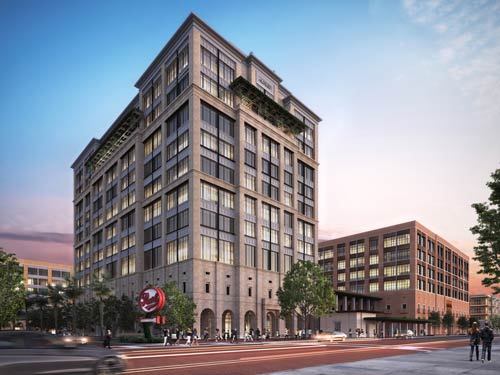
Our Austin Team can help you maximize your rebate and save you money over the lifespan of your building by integrating any number of water savings initiatives. Our team can develop a comprehensive water model to demonstrate the impacts of various systems and help you determine the right path forward.
For more information, contact water expert Jon Robertson today.
We’re introducing the first episode of our new Data-Driven Design Series, where we discuss with various experts both in and outside Glumac on cutting edge concepts we are currently integrating on building design projects across the world.
Here, we talk with Glumac Energy Engineer Gordon Stewart about his work building interactive dashboards that help owners make more informed, cost-effective decisions regarding the overall performance of their building.
As the energy grid across the West Coast becomes more reliant on clean power sources, Washington, Oregon, and California are responding with legislation that will push new and existing buildings to improve their energy efficiencies and carbon emissions. Our Energy team is here to help you chart a path to compliance and carbon reduction.
Here is a brief review of several upcoming pieces of legislation that are likely to impact West Coast owners in 2021 and beyond.
Washington State Clean Buildings Act
Set to phase in between 2026 and 2028, the Act sets new EUI targets buildings must meet, based on size building type and location.

Deadlines begin phasing in June 2026, for commercial buildings larger than 220,000 square feet, followed by buildings larger than 90,001 square feet in June 2027, and buildings larger than 50,000 square feet in June 2028.
While deadlines are several years out, the time to start paying attention to the Washington State Clean Buildings Act is now. There are multiple paths to compliance, however, and there are significant rebates available for early compliance.
Our energy group is assisting clients with early compliance to receive the maximum rebate possible. Learn more here. Or, contact Brian Goldcrump, our Northern Region Energy Lead, directly to discuss preparing your facility for compliance.
The 100 Percent Clean Energy Act of 2018
California’s 100 Percent Clean Energy Act is paving the way for cities across the state to craft their own electrification and decarbonization programs.
Also known as Senate Bill 100, the California Bill sets state-wide goal of powering all retail electricity sold in California with renewable and zero-carbon resources – e.g. solar, wind and others that do not emit greenhouse gases. Additionally, the bill:
- Updates the state’s Renewables Portfolio Standard to ensure that by 2030 at least 60 percent of California’s electricity is renewable (energy.ca.gov)
- Requires the Energy Commission, Public Utilities Commission and Air Resources Board to use programs under existing laws to achieve 100 percent clean electricity and issue a joint policy report on SB 100 by 2021 and every four years thereafter. (energy.ca.gov)
We are already working with several organizations looking to electrify and decarbonize. However, some in California are moving ahead of this timeline with commitments to be carbon neutral earlier than what is required by Senate Bill 100. We are partnering with the California State University system to chart a pathway toward carbon neutrality for all of its campuses by 2030. Many of these facilities require solutions beyond electrification to meet their accelerated timelines, and we already provided recommendations leading to 60% reduction in greenhouse gas emissions at the CSU Long Beach campus through a mix of onsite energy generation, HVAC retrofitting, carbon offset purchasing, and system electrification. Working closely with facilities staff and stakeholders at CSU, we’ve learned how to effectively develop tailored solutions to each client.
California Cities Push on with Building Electrification Requirements
So far, more than 40 cities across California have updated their building codes to reduce or eliminate their reliance on fossil fuels. This is being done largely through updates requiring new buildings be fully electrified. While no updates have been made to California’s Title 24 state energy code, these cities are forging ahead on their own to meet the state’s ambitious carbon reduction goals.
Using this interactive map you can see which municipalities have adopted some form of electrification. If you own or operate facilities in these areas that need updating for compliance, Brian Stern, our California Energy Team Lead can help. Click here to reach out.
We’re here to help you find clear solutions to complex problems. If you are in a jurisdiction with existing or upcoming electrification or decarbonization compliance mandates, we can help. To learn more about how we can help your facility meet its decarbonization goals, visit our energy team page.
As part of our work with Tetra Tech’s COVID-19 Task Force, we discussed with Dr. Willaim Bahnfleth, Chairman of the ASHRAE Epidemic Task Force, and Dr. Michael Kaiser, esteemed infectious disease expert, how personal environment style air purifiers can mitigate the spread of COVID-19 in the built environment, and create healthier spaces in the future.
Air filtration units are movable and offer a level of visual comfort to occupants. There are a variety of different personal environment systems capable of providing an enhanced level of safety and comfort in the built environment, including:
- HEPA filter units
- HEPA and carbon filter units
- HEPA and ultraviolet (UV) lighting units
- HEPA and titanium plate units
- HEPA, UV-C lighting, and bipolar ionization units
All of the above and combinations exist and are readily available in the marketplace. If the objective is infection control, our recommendation is the simplest units with a fan and HEPA filter only. These devices are efficient, cost-effective, and can capture 99.9 percent of the particles circulated. Strategically placed, these units can have a major impact on the health level of the individuals who occupy a space.
We’ve asked our expert about effectiveness and types of personal environments our clients should use. What follows is his response.
Is the reduction of particulates of a certain size in the air effective in mitigating spread?
Dr. William Bahnfleth: For SARS CoV-2, viral RNA has been found in very small particles that can easily be aerosolized. In some of his influenza research, Dr. Donald Milton, from the University of Maryland, found 90 percent of the viruses were in particles smaller than 5 microns in diameter. These devices can help remove particles that small, and they are very efficient. If you’re using HEPA filters with the highest penetrating particle size of 0.3 microns, that should be very effective against these aerosol droplet nuclei that are starting out mostly between 0.5 and 5 microns and reducing in size by 50 to 80 percent depending on the relative humidity.
Consider infection control in health care facilities. The basis of infection control in the most sensitive spaces is recirculation through HEPA filters. I don’t think that’s something that needs proof at this point. So, the question is mainly whether there is enough flow through the air cleaner and how well cleaned air is distributed. Even smoke testing just to see where the air is going will give you some idea of whether they’re being effective from a qualitative point of view in collecting the air that’s in the space.
Read the full Q&A here:
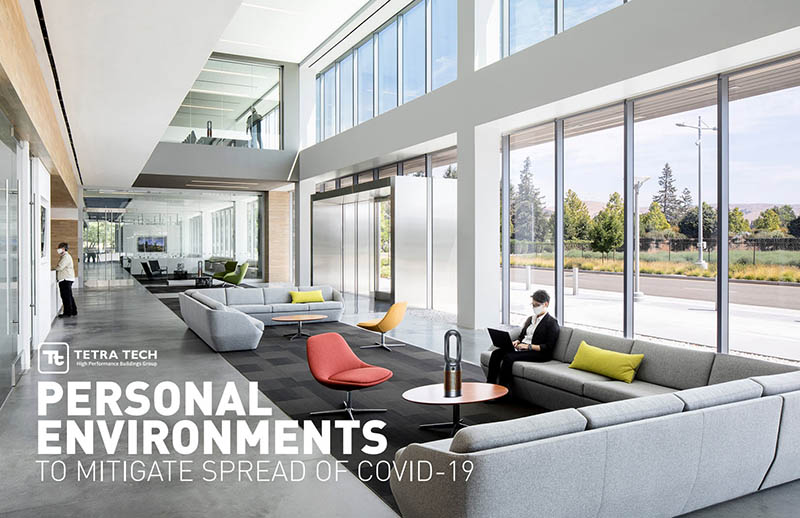
Image courtesy of Hyundai Motors
Over the next several weeks, we will be publishing a series on Sustainable Building Design Challenges and how our Sustainability Consulting Team responds to them. We asked the group a series of questions related to building design. This is the first entry in that series.
How do we make sure today’s big picture thinking results in future individual occupant satisfaction?
Sustainable building design often requires big picture thinking, a focus on site, informed bio-climatic design, and scenario planning for buildings and their connected and supporting systems. However, without an early focus on health or user engagement, big picture thinking can miss the mark on how satisfied occupants are within the spaces and spaces they engage.
From our experience on the One Beverly Hills master plan, we found that visioning exercises benefit from balancing bio-climatic metrics that inform high performance design (e.g., daylight, solar heat gain, wind patterns, air and water quality) with their impacts to human health, equity and inclusion. Imagining user “day in the life” scenarios is helpful, as is the benefit of occupant surveys, public health research, climate change data for resiliency, and biophilic design.
Glumac’s Sustainability Team collaborated with Terrapin Bright Green on a biophilic design plan for California’s New Natural Resources HQ in Sacramento, and we successfully procured two LEED Pilot Innovation credits for our approach. Interventions included locally procured rammed earth blocks for the podium exterior, additional outdoor terraces to provide views, and connections to nature for a high percentage of desk spaces.
This project is part of a larger Urban District among State office buildings Glumac is playing an integral role in designing. Along with the Clifford L. Allenby Building and a new annex building to the State Capitol, the three buildings will share a singular central utility plant as well as a focus on electrified systems throughout each building to lower their operational carbon. The project team for the annex building is considering going fully electric by connecting to the central plant for cooling and providing heating at the building via heat exchangers and electric boilers. This type of district-level design requires big picture thinking at the start of the project, and when implemented, still allows for optimal occupant satisfaction on an individual level.
To learn more about of Government Office experience, head over to our project portfolio.
Workplace modifications due to COVID-19 are now also equally important. Glumac has already performed several Building Readiness Assessments for clients, which help provide achievable pathways toward updating or replacing systems to help mitigate viral spread within a new or existing space.
We begin by identifying the “most valuable spaces” for staff based on owner’s requirements and guidelines– for both interior and exterior spaces. It’s a goal-focused and metric-based approach utilizing data such as distance to greenspace; drinking water sources; shelter from wind and rain; heat islands; percentage of desks near sufficient daylight and distance to places of collaboration; and conversely, places for respite. These metrics as Key Performance Indicators (KPIs) can be quantified in BIM, overlaying the qualities that support these “most valuable spaces” with known high-performance strategies (e.g., east-west orientation, efficient skin-to-floor-plate ratio, opportunities for passive temperature control) and evaluate scenarios for performance against these KPIs. We then document these performance measures and strategies in the basis of design document, which guides the design toward healthy outcomes for occupants.
Let’s Design Something Great Together.
The Glumac Sustainability Team’s consulting approach is foremost to be an owner advocate: to carefully listen to an owner’s goals, then tailor a management process to fit, and finally lead its execution with a collaborative spirit and the talents of the design and construction team. We want to empower all design consultants to bring their best ideas forward for a project, and our role is to be sustainability advocates, to provide strong leadership in goal-setting, establish metrics, document progress, conduct research, bring innovative ideas forward, and ultimately, to celebrate our collective efforts with certification results.