
Trends come and go in every industry. Some end up being passing fads and others transform their respective industries. It is likely history will show that some of the current data center modularity trends added little value to the industry, while others helped sustainably transform it.
Modularity is one such data center trend that could forever change the future of the industry. There are a myriad of “modular” data center variations. Some of the options include:
- Containers: Referring to containerized data centers that are an all-inclusive “data center in a box.” Shipping container-sized modules that are fully functional data centers with single points of connection for power, IT, water, and sewer.
- Pre-planned stick built: Modularity refers to MEP/IT capacity building blocks that allow the next “chunk” of capacity to be added in definable and repeatable “bite sized-chunks.” The construction around this definition still refers to stick-built construction.
- Pre-Fabricated: Modularity refers to MEP components that are definable bite-sized chunks but are also in part pre-fabricated off site and brought in as fully functional and tested, ready-to-go MEP/IT components.
Glumac has designed over 4M sf of data center whitespace. In our opinion, all mission critical projects have critical project constraints (cost, efficiency, speed to market, quality, etc.) that might benefit from a modular approach. Traditionally, two of the biggest challenges with data center builds are capital outlay and speed to market. The traditional brick and mortar data center is generally expensive with long lead times. Modular builds can not only help a client save money and time, but also allow them to better match their inherent growth, enabling a more sustainable business model with less stranded capacity.
What are some of the advantages of a modular approach compared to a traditional build?
1) Improved Speed of Deployment:
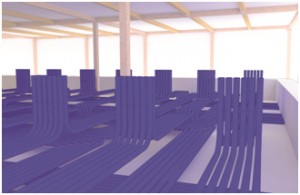
- Traditional construction methods are dependent on the determined project critical path. Certain aspects of a project build cannot start until others have been completed. In the data center industry, electrical buy-out and electrical construction is always on the project critical path. In theory, taking any item off the project critical path allows potential time to be saved (Figure 1).
- There are pre-assembled modular solutions that allow quicker time frames from order to deployment. As a standardized solution, modules can be ordered, manufactured, customized and delivered to the data center site in relatively short time frames. Any assembly work done off-site also means that the site construction can progress in parallel, instead of in series toward completion.
2) Potentially Higher Quality:
- Pre-manufactured components are typically manufactured in a controlled environment. Theoretically, this enables better working conditions, better QA/QC, pre-service testing and even commissioning of the component before shipping to the site. There are risks and costs involved in shipping. These need to be weighed as part of the decision making process.
3) Cost Efficiency:
A modular data center build can also reduce upfront capital outlay and stranded capacity. The modular approach can provide an “as needed” deployment of IT, electrical and mechanical capacities to accurately match the clients current IT demands and allow for quick deployment when future capacity is required. Therefore, a modular build allows potentially smaller initial builds with a predefined roadmap building block strategy for subsequent additional MEP/IT capacity. Basically, build what you need when you need it (Image 3).
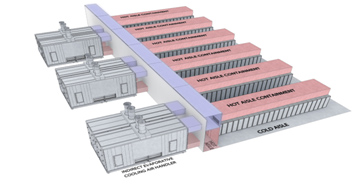
- With a repeatable, standardized design, it is easy to match demand and scale infrastructure quickly. The only limitations on scale for a modular data center are the supporting infrastructure at the data center site and the available land. Another characteristic of modular scalability is that modules can be easily replaced when obsolete, or if a technology refresh is in order.
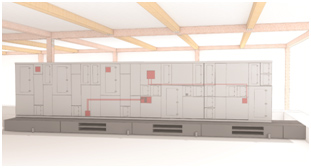
- Potential Labor Savings: A manufacturing facility in Nevada may employ workers with an average wage multiplier of 1. If the data center was built in New York City, the cost of labor might have a multiplier of 1.4 or higher. Having components pre-manufactured in Nevada, would save the project 40% on the labor associated with the pre-manufactured equipment.
4) Controlled Technology Relevance
- Technology in data centers is ever evolving and changing at rapid rates. The modular approach to building “just-in-time capacity delivery” allows data center IT personnel to implement current technologies, while still allowing future technological advances to be utilized when future MEP/IT capacity is required.
In summary, Glumac’s Data Center group feels that sustainable modularity will help transform the data center industry and get users to think in terms of “build as required MEP/IT capacity.” Capacity additions/refreshes can have different looks, but data centers are just too expensive, IT needs are too dynamic and IT technology is too fluid to not consider the modularity approach to data center capacity decisions.
For further information on design approaches in the data center market, please contact Sam Graves at [email protected].
As we begin to emerge from the recession that has plagued the last half decade, restorative efforts are taking place in communities across the Pacific Northwest. The key is finding ways to reshape these areas in a manner that is beneficial to the environment, while not straining budgets. One significant approach we at Glumac feel is essential to these restorative efforts is a design strategy that was first developed here in the Pacific Northwest called EcoDistricts.
While the commercial building industry has focused more and more on energy efficiency—almost always seeking to optimize the performance of a single building—we at Glumac took a renewed focus on efficiency solutions beyond the single building scale, crafting energy, water and waste systems that find greater efficiency by connecting buildings together. At Glumac we call this shared infrastructure an EcoDistrict System, a concept whose potential environmental and economic benefits are incredible.
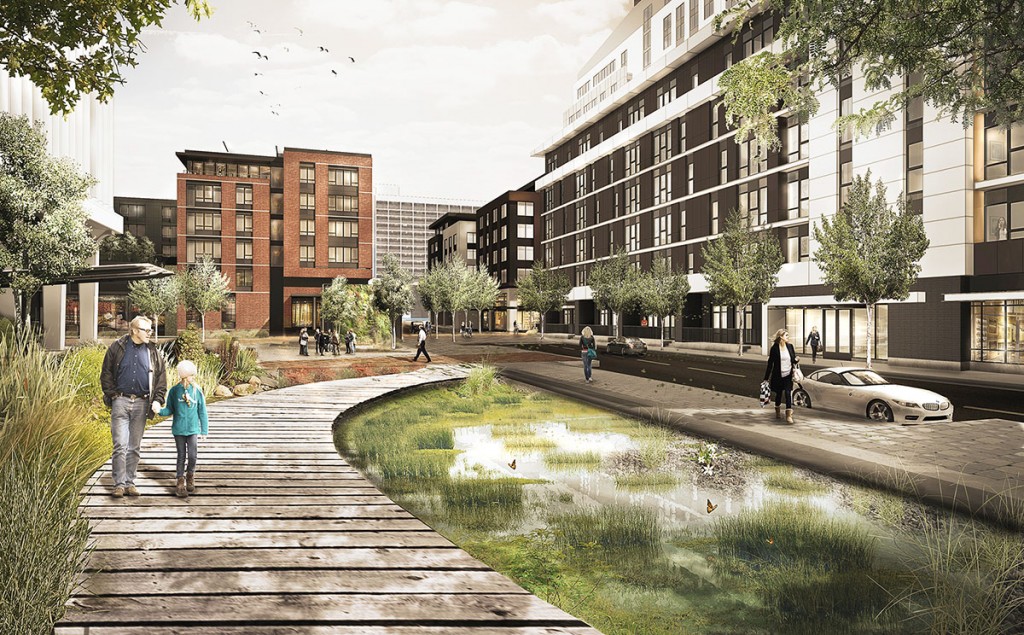
The benefits of EcoDistrict Systems go far beyond a reduced environmental footprint, transforming the economics of a project. Advanced energy and water systems can become very affordable when costs are spread across multiple buildings. Buildings connecting to efficient central systems can benefit from long-term operational savings. Beyond the economics, the value of a neighborhood, campus or community united behind common goals with a unique culture of sustainability cannot be overlooked.
“The Hassalo on Eighth development will transform
four city blocks in Portland, and EcoDistrict Systems
play a key role.”
District systems are an old idea, but Glumac is approaching them with a new focus. Early Edison power plants produced electricity and steam for small neighborhoods in New York City. Closer to home, wood waste powered district heating systems once served communities throughout the Pacific Northwest, including parts of downtown Portland. This scale of system is back, but with a focus on reduced environmental impact. Today, the EcoDistrict Systems Glumac is designing fall into three main areas of resource-efficiency: Energy, Water and Waste.
ENERGY: A shared condenser water loop—what Glumac calls an EcoLoop—connects the heating and cooling systems of multiple buildings at once. Individually, each building can reject heat to the loop when cooling is needed or extract heat from it when heating is needed. So, when some buildings on a loop require heating while others need cooling, the loop can use energy from one building to meet the needs of another, drastically reducing the amount of heating and cooling energy expended by each individual building.
Glumac is involved in numerous large EcoLoop projects, from southern California to Japan. On the northern edge of Tokyo, on a project led by ZGF Architects, we are proposing a major EcoLoop system in the growing Smart City of Kashiwa no Ha. This modular condenser water loop will grow with the development, connecting small groups of buildings and using the constant temperature of ground water as an extra source of thermal energy.
Closer to home, we’re working on a central condenser water system for Hassalo on Eighth, a four block development in Portland’s Lloyd District planned and designed by GBD Architects. The majority of the mechanical equipment for this system will be installed in an existing office building constructed in the 1970s. With more efficient equipment and systems, its mechanical room will be able to serve three new buildings, saving significant space in the new buildings and providing greater energy efficiency overall.
WATER: Recent droughts in the U.S. have emphasized the value of clean water and demonstrated the shortages we all may face without new approaches to water efficiency and reuse. At the Hassalo on Eighth project a district wastewater treatment system will serve four city blocks, turning sewage into reusable water onsite, virtually eliminating use of the city sewer.
This natural wastewater treatment system—engineered with Glumac partner Biohabitats—uses biological action in constructed wetland cells to purify the wastewater with minimal energy and almost no use of chemicals. The resulting water will be used to flush toilets, cool buildings, and irrigate green roofs and landscape. The system will divert more than 16 million gallons of wastewater from the sewer every year, providing 4.6 million gallons of water for reuse. Importantly, the system will pay for itself in four years.
WASTE: Disposing of solid waste is a burden on every community. It requires enormous landfills, and often, long distance transportation. However, technology exists to actually turn much of this waste into a resource at a much smaller scale. At Kashiwa no Ha, Glumac is proposing a community-scale anaerobic digester, which is a series of large closed tanks that ferments organic waste into methane and compost. The digester system, based on working examples in many countries around the world, would reduce solid waste by up to 40 percent, generate methane gas for use in the district and recycle nutrients into agriculture-ready compost.
Feeding this digester would be a vacuum waste collection system which takes sorted waste from intakes the size of mailboxes positioned in and around buildings. This system of underground pneumatic tubes can run up to a kilometer through a neighborhood, and will eliminate the need for large waste bins and for garbage and recycling trucks.
These systems are only part of the broader EcoDistrict approach to sustainability in the built environment. As one member of a comprehensive design team, we are partnering with planners, urban designers, architects and landscape architects to envision neighborhoods and campuses that address all aspects of sustainability in the built environment.
These emerging district system approaches are ideal for mixed-use developments, and especially for college and corporate campuses. We look forward to helping more clients understand the value of connecting multiple buildings together and dealing with environmental impact at a scale beyond individual buildings. EcoDistricts are a powerful strategy that benefits all of us, our communities and our budgets.
Images courtesy of GBD Architects. Copyright 2014.
Rem Wilson is a Principal at Glumac, and serves as a member of the Clark County Solid Waste Advisory Commission. For more information, please email us at [email protected].
The journey of a thousand miles
must begin with a single step.
~ Chinese proverb
The International Living Future Institute (ILFI) is making huge strides this year with its signature certification program and green building philosophy, The Living Building Challenge (LBC). ILFI has partnered with Glumac, Gensler and Shimizu to plant the first seed in Asia with the continent’s first-registered LBC project: Glumac’s new 6,450-square-foot (600-square-meter) office TI in Shanghai, China. The tenant improvement targets Full Living Building Certification, featuring Net Zero Energy, Net Zero Water and Net Zero Carbon. Additionally, this project targets LEED Platinum certification under the new Version 4 for Commercial Interiors. In China’s fast-paced and fractured economic landscape, these are challenges of the highest order.
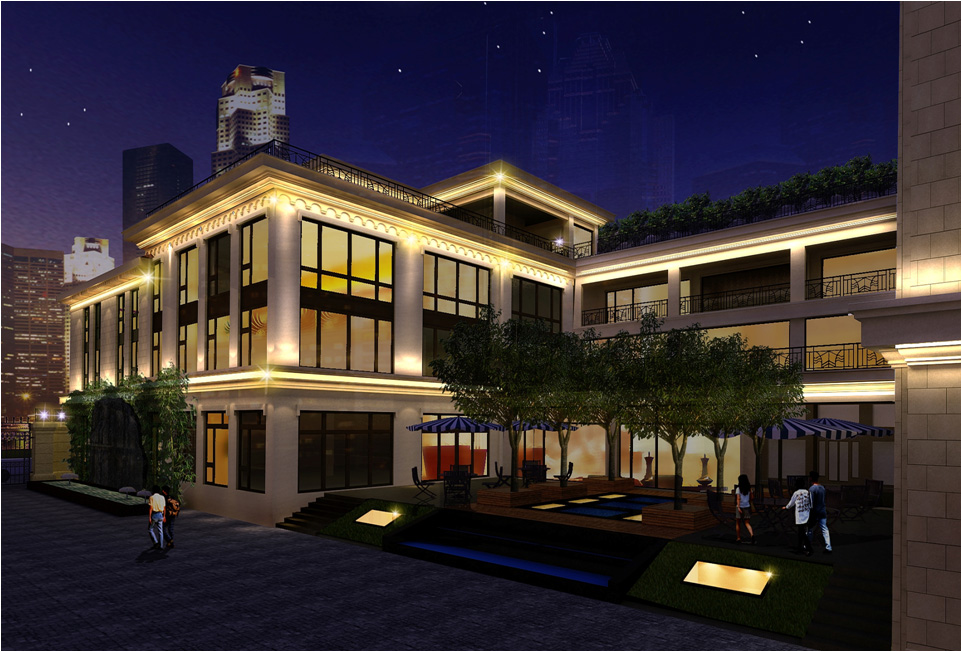
The new office will support Glumac’s local presence in China and will showcase to the world that the most advanced measure of sustainability in the built environment is taking its first step into Asia. A cross-cultural and geographic team, comprising Glumac engineers and Gensler architects in Shanghai, Portland and Seattle, Japanese construction partner Shimizu, Shanghai-based green materials consultant GIGA, and Seattle-based James Connelly of ILFI, have collaborated over eight months and target an office opening in August 2014.
History
Given Shanghai’s rich history of pioneering development, it seems appropriate that the first Living Building Challenge project begin in Shanghai as a bold step forward for green buildings in China and throughout Asia. From the latter half of the 1800’s with the establishment of an English settlement, French concession, and the famous Bund to today’s iconic Oriental Pearl Tower, Jin Mao Tower, Shanghai World Financial Center, and most recently the Shanghai Tower, the city’s skyline has always represented the cutting-edge of building and engineering technology.
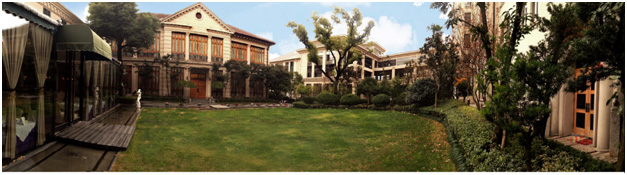
The office space will occupy half of the third floor of an existing four-story, 50,000-square-foot (4,650-square-meter), 100-year-old building, which is one of several buildings in a campus development, called 753 Jia Chun Park and located on Yuyuan Road in Shanghai’s Changning District. The Park was built in 1912 as a vacation residence for the Rockefeller family. Filled with lush vegetation and mature trees, the Park is a peaceful escape and sits in stark contrast to its heavily urbanized surroundings.
The mansion later became famous in Shanghai as a private clubhouse for US investors to gather. When Chinese warlord Sun Chuanfang took full control of Shanghai during the 1924 Jiangsu and Zhejiang war against the Japanese invasion, the Park became military command center to support his efforts. After the outbreak of the war, the residence changed hands several times; however, details were not recorded. From 1964 to 2010, the campus was used by the Chinese Military as a library and residence.
In 2011, a private developer leased the campus for the next 30 years with plans to complete renovations and lease space to the public.
Living Building Challenge Design Approach
ILFI’s Living Building Challenge (LBC) comprises seven environmental and social impact areas called Petals, and from each Petal stems 20 Design Imperatives. All Imperatives must be achieved to reach Living Building status.
LBC is the most advanced green building standard in the world. It goes beyond the more commonly known LEED green building rating system because certification is based on rigid requirements, such as actual metered performance of the project’s Net Zero Energy and Net Zero Water designs as well as the avoidance of toxic chemicals commonly found in building materials. Originally crafted for the U.S. building industry, applying LBC in China is incredibly difficult. The project team continues to face technology, regulatory, communication and construction hurdles every step of the way.
LBC is a philosophy for the future of green building. As such, education and advocacy to regulatory authorities and the building materials industry has played a large role in our design effort because in China, formal standards, processes and documentation, in many cases, simply do not exist and must be created from scratch to meet LBC standards. Fortunately, we have a project team that is passionately committed to LBC, a willing landlord and a group of product and material partners that together have designed the Glumac Office with the goal of achieving LBC’s Living Building status.
Office Program
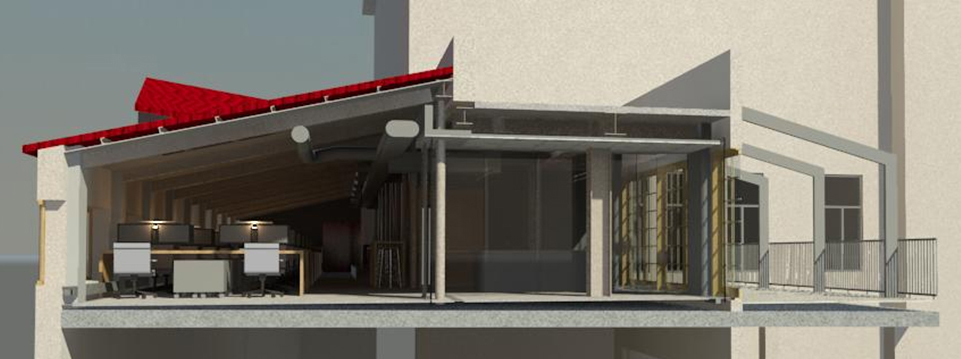
The 6,450-square-foot (600-square-meter) office space has a long, narrow footprint with sufficient daylight from operable windows and dormers. The office will have an open floor plan seating 30 people, in addition to three private offices and two glass enclosed conference rooms with movable partition walls. The conference rooms open up to a large balcony via three sets of French doors and overlooks the Rockefeller Mansion and surrounding landscaping.
Energy
The Glumac team approached Net Zero Energy using a four-step design process. First, improve the thermal performance of the walls and roof; second, design the floor plan to accommodate daylight; third, select low-energy consuming equipment; and four, offset the remaining energy use by generating renewable power on-site.
The team began the design process by setting lofty goals including an Energy Use Intensity (EUI) of 24 and a lighting design goal of at most 0.2 watts/square-foot (2.5 watts/square-meter). To accomplish this goal, the team is using a combination of technologies.
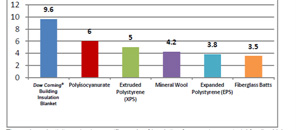
Dormers are insulated using Dow Corning®’s Building Insulation Blanket, with a thermal performance of R-9.6 per inch. The insulation is eight to 10 times thinner than Mineral Wool, fits in limited spaces and is highly flexible. Another Dow Corning® product, the Vacuum Encapsulated Panel, contains 95 percent recycled content, a thermal performance of R-40 per inch. This will be used to insulate the roof and walls.
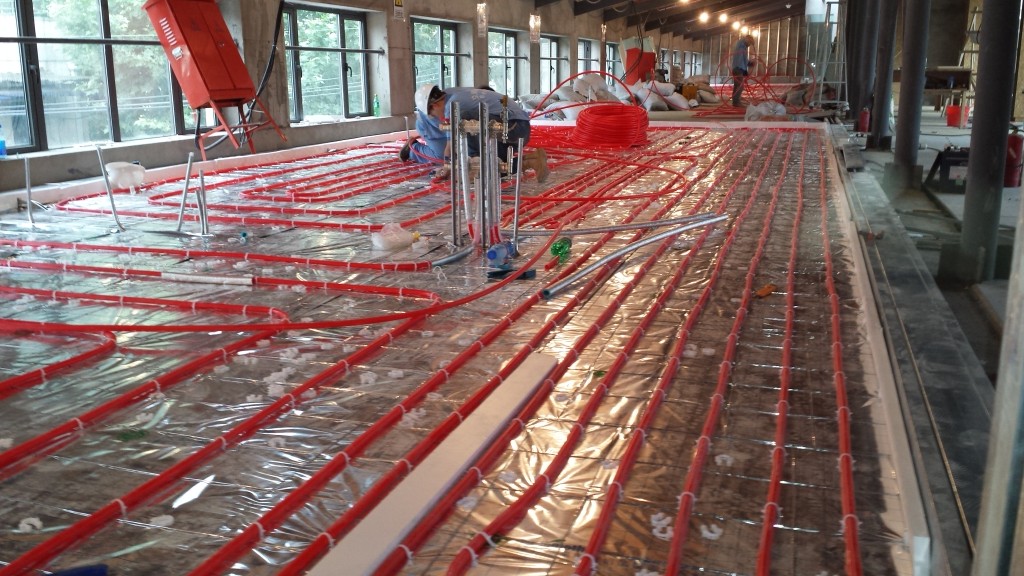
Low-energy systems include radiant slab heating and cooling and an overhead ventilation system with an encased dehumidification unit capable of wringing out Shanghai’s high moisture-laden air, which hovers around 75 percent average humidity year-round.
The space’s lighting design couples daylight with smart glass and highly efficient lighting systems. The French doors leading to the balcony will contain a Chinese-made smart glass system that tints to inhibit glare on sunny days. In the space, lighting will be 100 percent LED, including Tambient’s sleek and elegantly designed third-generation task lighting system, which enables a 75 percent reduction in power by lowering overhead lighting from the ceiling to the end user.
The remaining energy load will be offset via a rooftop mounted photovoltaic solar array that will be tied to the building and the Park’s campus grid.
Water
Shanghai receives approximately 46 inches (117 centimeters) of rain annually, more than enough to supply the office’s water needs. In fact, the landlord asked to upsize the water tank to accommodate other building tenants. What is currently designed is a 21,000-gallon (80-cubic-meter) tank located in the building’s basement. The rooftop’s pitched red clay tile will convey water down the existing downspouts to the tank. A three-step, non-chemical filtration system will treat the rainwater as well as collected condensate from the dehumidification unit to serve toilets and possibly even faucets, if the local authorities grant permission due to Glumac’s ongoing advocacy effort. Regardless, Glumac will continuously test the water to help build the case for on-site water treatment systems. Collecting condensate is also a relatively new water reuse strategy in Asia and through metered data we hope to show people how much water can easily be saved.
Low-flow plumbing fixtures will be installed to efficiently use the collected water. This includes two Envirolet composting toilets that will sit side-by-side two conventional low-flow toilets for employees and guests to test and ideally dispel any fears about odor or performance.
Health

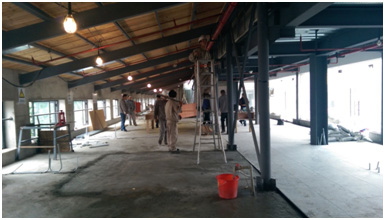
The goal was to maintain healthy indoor air in a city that reports harmful air pollution levels, is ranked “Unhealthy” to “Very Unhealthy” on the China Air Quality Index (AQI), and at times has a particulate matter index (PM 2.5) of 250 µg/m3. Lofty goals that went beyond LBC requirements made the project even more taxing. Frustrated by poor air quality and its impact on staff health, the team is targeting indoor air quality that blocks out most particulate matter to PM 2.5 of less than 50 µg/m3. It is attainable through a three-stage filtration system that consists of first Merv 8, followed by electrostatic, then Merv 15 filters. Air quality is also being measured during construction to compare outside air with dust and construction particulate quantities inside the space.
The team hopes that the space’s operable windows and French doors will be freely used in the future when outdoor air quality improves. Until then, the staff can connect with the outdoors though campus views of lush vegetation and age-old historic buildings, combined with similar interior elements including salvaged wood and grey brick reminiscent of historic Shanghai architecture. This biophilic design approach mixes natural elements and analogues to create a space that will connect employees and guests with nature as well as the campus’ rich history.
Materials
The idea of local “made in China” products took on a whole new meaning for the U.S.-based offices of Gensler and Glumac that supported their Shanghai-based teams. The goal was to meet LBC’s stringent Red List and sourcing requirements, while selecting materials and equipment that would meet the function and performance expectations of the team. This can be hard to do in China’s “make it cheap and fast” manufacturing market. Our Shanghai-based materials consultant, GIGA, helped navigate this landscape. Their chemists and material experts research materials, offering alternatives and communicating with manufacturers for data on ingredient chemistry, sourcing and indoor air quality emissions. The entire team became material experts, off sorts, and advocates working with local manufacturers to disclose their tightly held information on the various materials and products they supply.
Glumac and Gensler began the process for selecting interior finishes by brainstorming a material list that would fit the typical “look and feel” of a Glumac office. The list was then vetted by GIGA and, where necessary, alternative materials were identified or the material was dropped to simplify the interior palate and avoid Red List issues. Almost all wood in China is imported, so Gensler and GIGA worked to identify local salvaged wood products for trim and furniture. For MEP equipment, our engineers began with a list of preferred manufacturers and products and then our general contractor, Shimizu, a Japanese contractor with a local Shanghai office, shared the research burden with GIGA to identify local alternatives. One example was the smart glass system. Sage Glass is an LBC compliant material, but it’s manufactured in the U.S. Shimizu identified a China-based manufacturer that produces a similar product, called “Nanbo Glass,” that the team determined met their performance standards.
Communication
It’s easy to think that material sourcing alone was a key challenge. In fact, how the team communicated across language, culture, disciplines, geography and time zones required similar creativity and commitment.
All firms involved required expertise from their hub offices to support their smaller, satellite offices in Shanghai. Glumac’s MEP, commissioning, energy and daylight modeling and sustainability experts partnered with their counterparts in the Shanghai office. Gensler’s Seattle, Washington office did the same with their Shanghai office as well as Shimizu’s Tokyo, Japan, staff with their local office in Shanghai. The goal was to collaborate in situ as an integrated design team and to abide by the LBC regional requirements for consultant travel.
To streamline the design process and collaborate around-the-clock, Glumac Portland and Shanghai offices used Building Information Modeling (BIM) software including Autodesk Revit to inform the design process very early on. Using Autodesk’s Green Building Studio, the team could utilize the information in the Revit model to run studies such as energy performance using eQuest and daylight and lighting quality using AGi32.
The quality of the design and the software tools used are only as good as a team’s ability to communicate effectively. That said, the Shanghai and U.S.-based project teams became global communication-media junkies by testing an array of tools to host workshops, brainstorming sessions and to collaborate on a daily basis. Online video and audio tools, such as FaceTime, Skype, GoToMeeting, Adobe Connect, Dropbox, SharePoint, Deltek Vision and Glumac’s intranet, enabled low-cost, real-time interaction and reliable (well, sometimes) communication streams for meeting and information sharing. Overall, the tool with the best visual and voice clarity is Apple’s FaceTime application. U.S. team members could virtually join a Shanghai-based design meeting as a “talking head” on an Apple iPad. Last, the U.S. team had to take the majority of night calls and work split shifts to accommodate the 15-hour time difference.
A New Beginning
While this project is the first-registered project to target the Living Building Challenge in Asia, there is yet more work to do and great opportunity to positively impact the built environment throughout the region. It is our intention that the finished project will not only showcase the best of Glumac and its partners and improve the quality of life of our Shanghai staff and the other building tenants as well as the surrounding community. It is also our hope that this flagship project becomes a path for others to leverage and help take more strides toward sustainability throughout Asia in the future.
To learn more about our Shanghai Office LBC journey, we welcome you to email us at [email protected].
Glumac’s mission, to create green buildings that work, requires rapid and iterative analysis of unbuilt projects. Our growing team of analysis experts leverages Building Information Modeling (BIM) to support design-phase decisions without the delay of building new models for every purpose.
But how can software and a design process affect sustainability? Find out how BIM is empowering us to drive sustainable design, inform our clients, and save them money like never before. We teamed with Autodesk on a new video to describe our culture of sustainable design and innovation.
“Product excellence by itself is not enough, the luxury brand must perform at an experiential level as well.”
-Rohit Arora, Strategic Planning Director, BPG Group
Many in the hospitality community perceive that sustainability comes at the expense of luxury. However, the market has transformed. Environmental stewardship can in fact attract potential visitors who seek substance in their luxury experience and can offer the additional benefit of energy cost savings to facility operations.
Several recent luxury projects, including The Allison Inn & Spa and the Sokol Blosser winery tasting room have used sustainability to support their mission and promote their luxury brands with great success. Post-occupancy review of these facilities’ energy use demonstrates that sustainability and luxury can indeed coexist ideologically and financially.
The Allison Inn & Spa
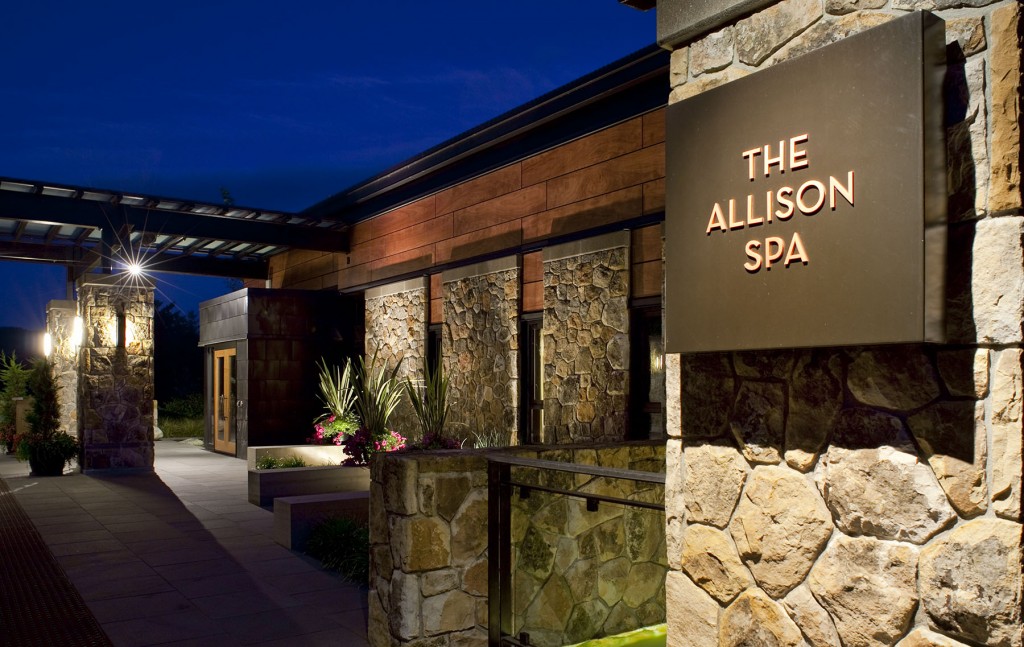
Located in Newberg, Oregon, and adjacent to the thriving wine country of Yamhill County, The Allison Inn & Spa combines luxury with a commitment to sustainable practices. The project features a 5-star hotel, indoor pool, restaurant, and a day spa. The single greatest energy use is the spa, which uses large volumes of hot water for luxurious treatments. The spa, combined with the guest rooms, pool, and kitchen, places a significant burden on hot water heaters to produce hot water for the various building functions. In the end, the Inn and Spa achieved LEED Gold status and more than 50% energy savings, compared to similar facilities, due to a strong focus on energy efficiency measures.
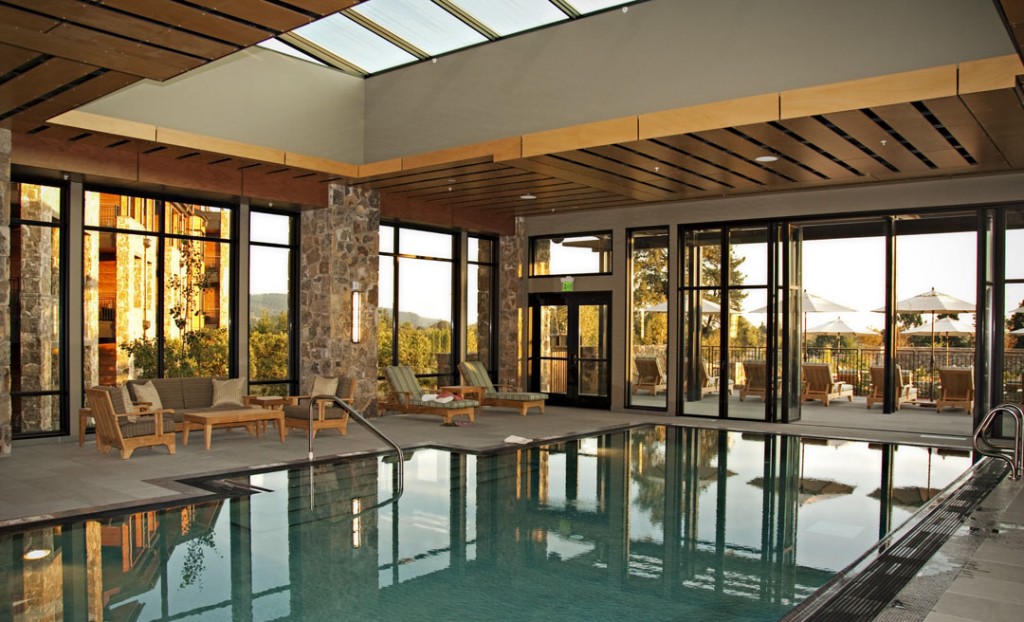
When the project began, the directive was to provide sustainable design solutions to maximize the operating efficiency while maintaining the luxury expected by guests. The result was the use of a variable refrigerant flow (VRF) system to maintain building comfort, dedicated outside air systems to provide fresh air, solar hot water panels to minimize gas consumption associated with hot water heating, and solar PV panels to produce as much of the building’s electricity as possible. The result is an integrated roof structure that harvests significant amounts of energy from the sun without impacting the views or the experience of staying at the hotel.
A comparable hotel would have an Energy Use Index (EUI) of 229 kBtu/ft2-yr in order to support the level of amenities. After completing the post-occupancy energy evaluation, we established that the building uses less than half the energy and operates at an EUI of 118, saving more than $200,000 per year in annual operating costs. The solar hot water and solar electric systems together offset nearly 20% of the annual energy consumed in by the building.
Lighting, sound, and thermal comfort play a key role in creating spaces that both relax guests and support diverse space uses. Brent Medsker of Glumac’s Lighting Design Studio paired light fixtures to every specific need, always with sustainability and aesthetics in mind. Multi-scene controls meet the diverse lighting needs of conference rooms with multiple uses and furniture arrangements. LED lighting above guest room doors and in the spa create ambiance and way finding while minimizing energy consumption. Controls and a range of lighting types in guest rooms enable guests to create custom conditions for relaxation in their private environment.
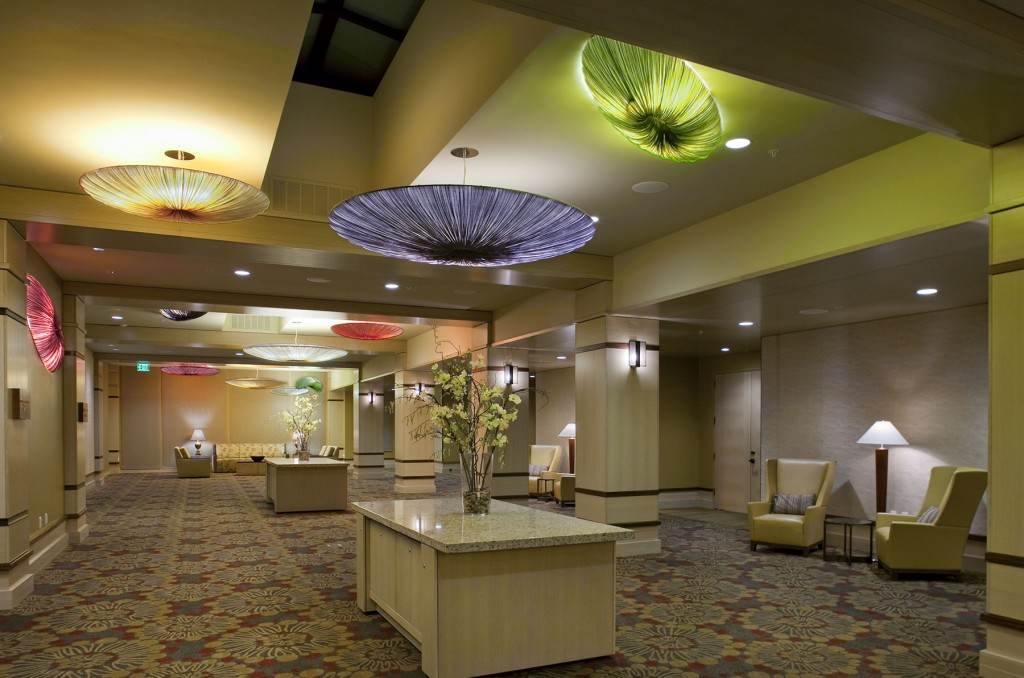
While the energy performance has been great, the reviews of the building have been even better. Further proving that sustainability and luxury can go together, The Allison Inn & Spa has received multiple awards and recognition for excellence in hospitality, wine, food and spa experiences, including:
- Trip Advisors Green Leadership Award, ranked second in the United States
- US News & World Report, ranked third best hotel in United States
- Wine Spectator, Best of the Award of Excellence in 2013
- Organic Spa, ranked first Eco Spa in 2013
- Condé Nast Traveler 2012 Gold List “The World’s Best 511”
For a comprehensive list, please click here.
Sokol Blosser Wine Tasting Room
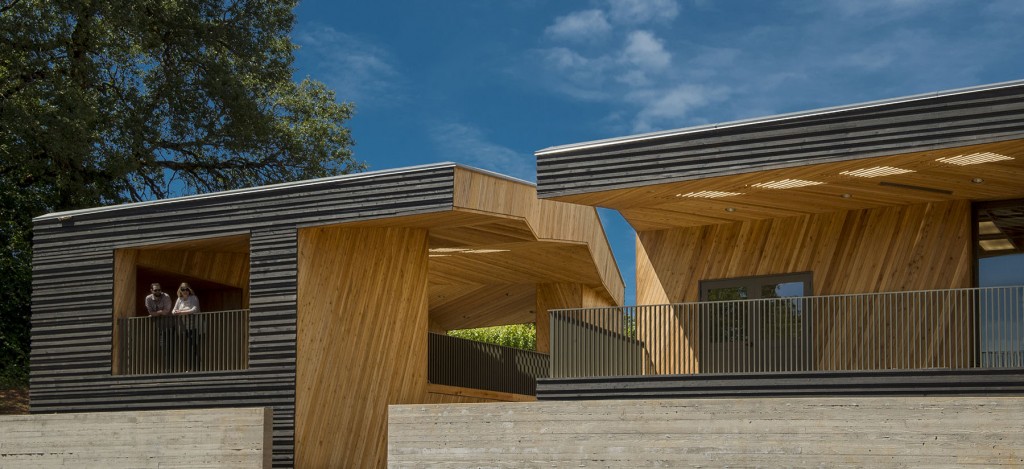
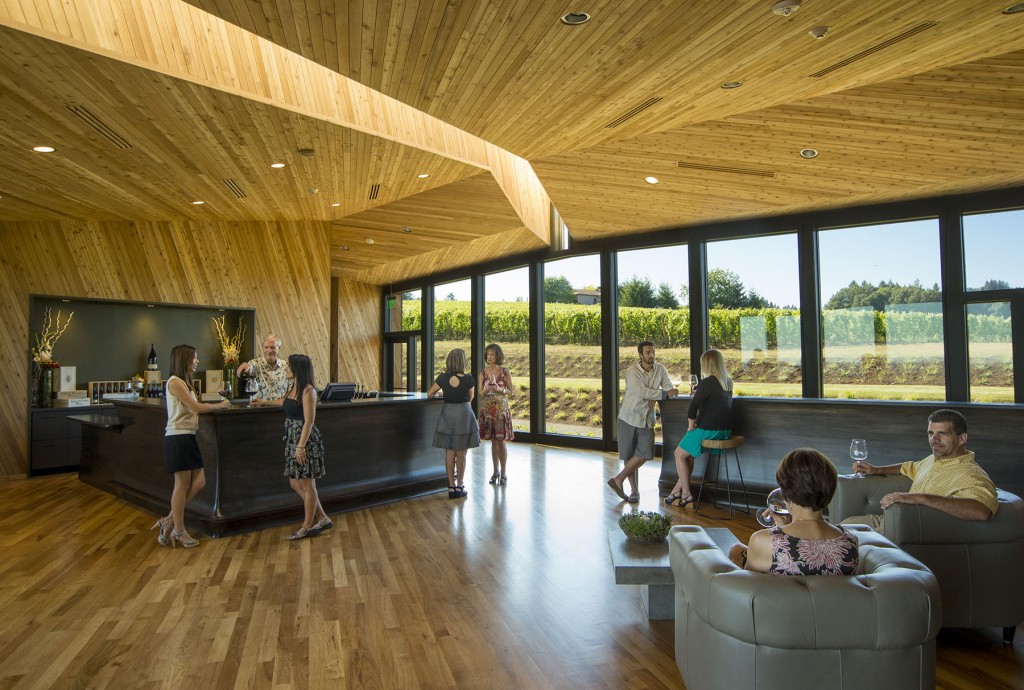
A short drive down Highway 99W from The Allison Inn & Spa sits Sokol Blosser, one of the pioneering wineries of Oregon. Bill Blosser and Susan Sokol Blosser first purchased the land in 1970 and planted the first grapes in 1971. From the beginning, both Bill and Susan understood the impact that typical farming and wine production have on the environment. To that end, one of Sokol Blosser’s values remains simple and focused: “be good to the earth.” A recent representation of their commitment to environmental stewardship can be found in their new wine tasting room designed by Allied Works Architecture of Portland. The new building pursued Living Building Challenge petal recognition, including Net Zero Energy certification.
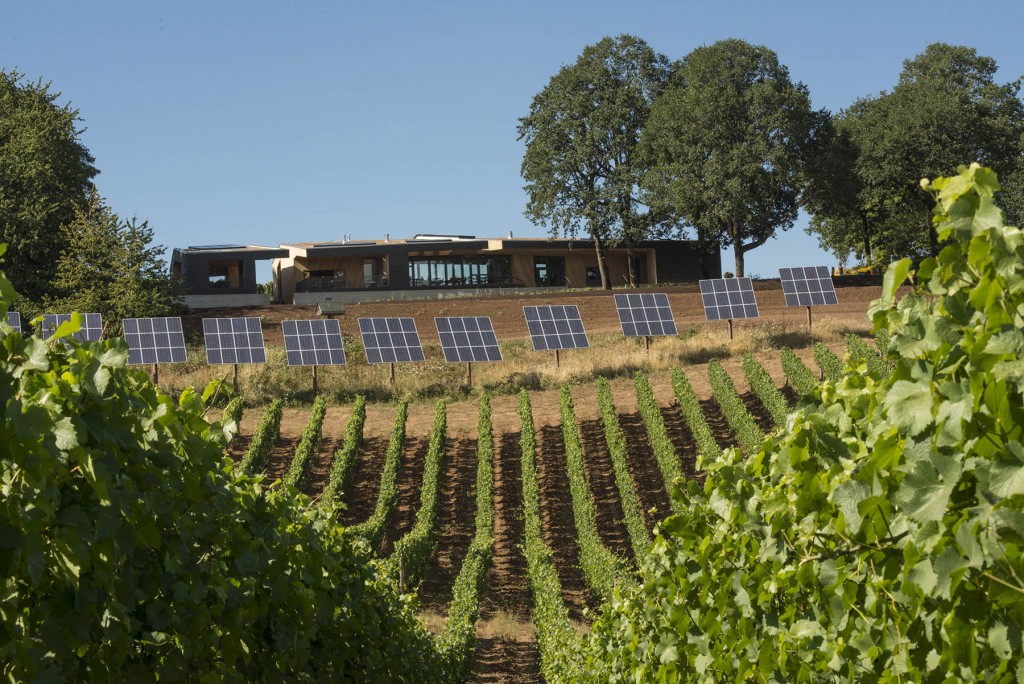
The project design targeted an EUI of just 20. This low energy consumption is to be offset by a 24 kW solar electric system installed at the south side of the building. In the first year of operation the building performed very close to expectations but missed the Net Zero Energy certification. The post-occupancy review identified key opportunities for improvement. For example, the energy use of the refrigerators, as provided by Energy Star estimates, assumes only a handful of uses per day for opening and closing a refrigerator. However, in a wine tasting room, servers are constantly opening the refrigerators to retrieve wines for customers to try. Through these lessons learned, Sokol Blosser’s staff is working together to identify and actively adjust areas to minimize unnecessary energy consumption. Sokol Blosser remains committed to Net Zero Energy long term, in addition to achieving a Net Zero Energy certification and is evaluating other steps including the potential of expanding their onsite solar electric system.
The world-class facility embraces the values of sustainability and provides an excellent road map to success without sacrificing the quality of the product. Sokol Blosser’s farm and new tasting room is a must-see experience for both wine and sustainability enthusiasts.
The Allison Inn & Spa and Sokol Blosser projects show that luxury now requires a strong demonstration of environmental stewardship to remain competitive with the best the world has to offer. Today, consumers increasingly demand that the things they enjoy in life have a minimal environmental impact. Luxury is truly being redefined through sustainability.
With phase II of the Metro Expo Rail Line well underway, Los Angeles is on track to becoming a cleaner, more pedestrian friendly, transit-accessible city. Metro’s Expo Line phase I extension from downtown Los Angeles to Culver City prompted an increase of nearly 6% in light rail ridership for 2013, reflecting the need and desire for transportation alternatives for the city. This uptick in public transit use mirrors a nationwide shift toward leaving the car at home. The highly anticipated completion of the Expo Light Rail Line will finally connect Angelenos from downtown Los Angeles by rail to the beaches of Santa Monica for the first time in over 60 years. To support the rail operation, an efficient, modernized hub designed to optimize maintenance of the rail system will reach completion in April 2015. Located on a brownfield redevelopment site bordering the Light Manufacturing Studio District and Pico Neighborhood of Santa Monica, the Expo Rail Line Operation and Maintenance facility will maintain a fleet of 45 rail cars that will accommodate an estimated 64,000 daily riders by 2030.
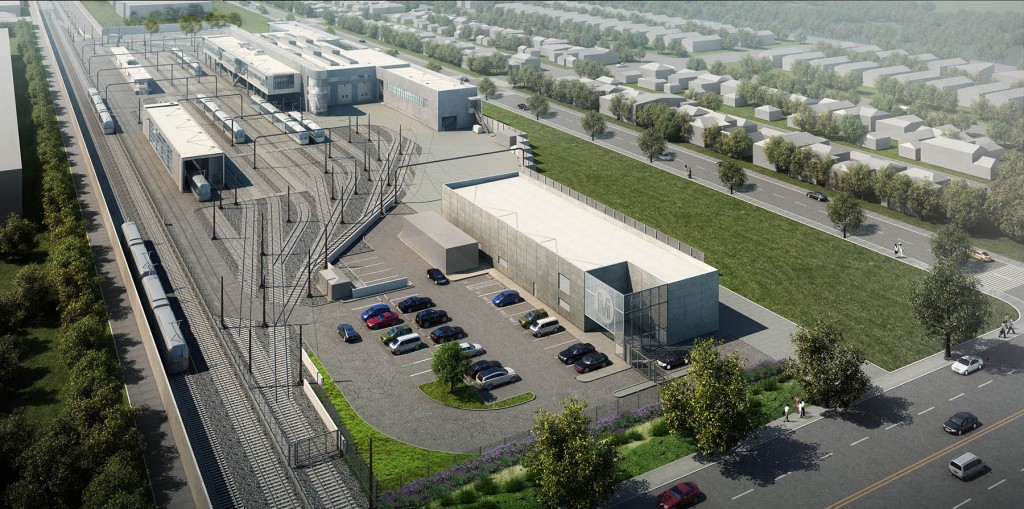
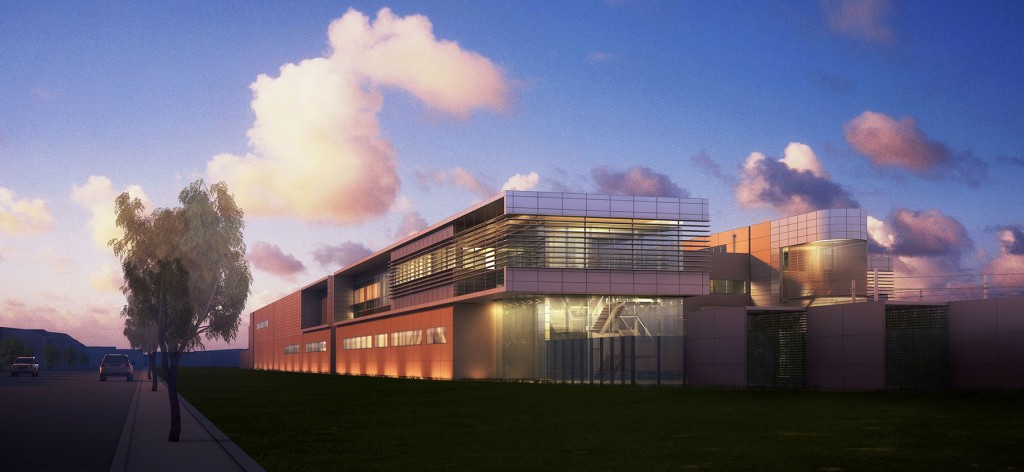
Metro and the community’s design considerations for the maintenance facility were traffic, sound, aesthetics, safety, energy efficiency, and low maintenance requirements. To mitigate the project’s economic, environmental and social impact, Glumac worked with architects RNL and a team of civil and structural engineering specialists (see project facts below) to implement an integrated design strategy. This approach emphasized design team collaboration early in the process as the optimal way to set goals and chart innovation for the project. Opportunities for efficiency and sustainability measures were explored through an initial Eco-Charrette with stakeholders and the community, and a series of bi-weekly meetings that aligned the design team under shared guiding principles.
Through this integrated approach, the design team set the foundation for an efficient, high-performance maintenance hub that responds to the needs of both transit riders and neighbors. Glumac’s goals for the project build upon USGBC’s LEED rating system and aim beyond these standards to achieve the best outcome. Some of the prominent sustainability features include natural ventilation, underfloor air distribution, radiant heating, and a solar hot water system used for both domestic hot water and HVAC.
Natural Ventilation
One of the resources the city of Santa Monica enjoys is excellent outdoor air quality. Utilizing both cross and stack ventilation, the building is oriented for exposure to westerly winds from the ocean, optimizing the interior for natural airflow distribution and buoyancy.
To promote cross ventilation in the maintenance areas, two 20-foot high bay doors are located at either end of the building. A series of operable clerestory windows comparable in overall size to the bay doors, are designed into the roof to relieve heat trapped below. Occupant controlled, six-blade High-Volume, Low-Speed (HLVS) fans will provide slow air movement to aid natural ventilation during hot summer months. The fans can be reversed during the winter to destratify warm air down to the occupied areas below.
Underfloor Air Distribution
Private offices will be outfitted with operable windows for individual comfort control. When opened, these windows actuate a switch to restrict the HVAC supply air to the room, saving energy while maintaining comfort. This localized natural ventilation system will work in concert with an underfloor air distribution system as an efficient way to deliver cool air to the space.
A raised floor plenum will house both HVAC air supply and cabling. In addition to the energy savings benefits of the system, the underfloor air distribution will improve indoor air quality due to the unidirectional airflow in the space. Occupant controlled diffusers regulate air delivery, allowing individual control of comfort. Additionally, the underflow air distribution system allows more flexibility for future reconfiguration of the space with minimal cost.
Solar Hot Water
Central to the maintenance facility design is the solar hot water system, which will generate hot water during the day and store unused hot water for nighttime operations. This system is unique in that it will allow for domestic hot water heating, and also function as the primary heat source for radiant heating applications. The integration of the solar hot water with the HVAC system will provide over 20% of the heating energy for the building.
Composed of flat plate solar collectors discreetly located on the roof and a series of pumps, controls, and storage tank, this system will significantly lower the dependence on natural gas consumption by producing 50% of the domestic hot water demand. Decreased emissions, as well as subsequent cost reduction to the owner are all part of maximizing the project efficiency. Located in the maintenance bay areas, the radiant heating system will provide optimal comfort conditions year round for the maintenance pit workers on both day and night shifts under cooler conditions, and will prevent excessive heat loss when bay doors are open.
Glumac designed a hybrid system with a back-up, high-efficiency condenser boiler that will provide emergency heat on overcast days and when water is in high demand.
Water conservation measures implemented by Glumac include low-flow fixtures that will account for a 44% indoor water reduction, as well as the installation of a self-contained Westmatic train wash. The train wash features a recycling system that filters grey water for reuse, greatly reducing water use and cost.
Lighting
In collaboration with RNL, Glumac incorporated effective daylighting throughout the building via skylights, clerestories, and windows. High efficiency LED light fixtures will be used throughout the facility with fully dimmable controls in the offices, maintenance bays, and shops. Occupancy sensors and integrated lighting controls, to reduce power consumption when adequate daylight is available, will ensure maximum energy savings for the project while providing ideal light levels at task surfaces. In the rail yard and maintenance pits, Glumac designed lighting to reach optimal levels to safeguard maintenance workers while minimizing light pollution to the surrounding neighborhood.
Overall Efficiency
These strategies combine to form an elegant, responsive design solution that far exceeds standard practice in optimizing building performance. The modeled energy use intensity (EUI) is an attractive 33.75 kBtu/sf/yr. Actual energy use will be monitored through the measurement and verification plan.
Together with RNL, Glumac’s implementation of this framework sets an industry precedent for future development of this kind. The Metro Expo Rail Operation and Maintenance facility will serve as a benchmark for high-performance transportation maintenance buildings.
Phase II of the Expo Rail Line is anticipated to begin service to downtown Santa Monica as early as 2016, bringing the future and the beach even closer.
Project Facts
Location: Santa Monica, CA
Project Size: 78,850 square feet, 2-story building, 8.3 acres, 45 rail cars
Scheduled completion: 2015
Owner: Exposition Metro Line Construction Authority
Project Management: Maintenance Design Group
Architect: RNL
MEP Engineer: Glumac
Structural Engineer: Nabih Youssef & Associates
Civil Engineer: W2 Design, Inc.
Delivery: Design-Bid-Build
LEED: Pursuing LEED-NC Gold level certification
Works Cited
-
Beals, Callum. “Public Transportation Surges in Los Angeles” Sierra Club. 10 April 2014. Web. http://sierraclub.typepad.com/greenlife/2014/04/los-angeles-public-transportation-surge
-
American Public Transportation Association. “Record 10.7 Billion Trips Taken On U.S. Public Transportation In 2013” APTA. 10 March 2014. Web. http://www.apta.com/mediacenter/pressreleases/2014/Pages/140310_Ridership
-
“Americans riding public transit in record numbers” Associated Press. AP. 10 March 2014. Web. http://www.naplesnews.com/news/2014/mar/10/americans-riding-public-transit-record-numbers/
-
Boverman, Neal. “Expo Line Hits 2020 Ridership Goal But Still Has Room For Future Santa Monica Riders” LA Curbed. 22 January 2014. Web. http://la.curbed.com/archives/2014/01/expo_line_hits_2020_ridership_goal
-
Walker, Andy. “Natural Ventilation” Whole Building Design Guide. National Institute of Building Sciences, 15 June 2010. Web. http://www.wbdg.org/resources/naturalventilation
The International Living Future Institute (ILFI) is making huge strides this year with its signature certification program and green building philosophy, the Living Building Challenge (LBC).
ILFI has partnered with Glumac and Gensler to plant the first seed in Asia with the first registered LBC project: Glumac’s new 6,000-square-foot office TI in Shanghai, China. The tenant improvement targets the Living Building Challenge in addition to LEED Platinum certification under the new Version 4. The new office will support Glumac’s local presence in China and will showcase to the world that the most advanced measure of sustainability in the built environment is beginning to take hold in Asia. We are fortunate to work with our great team of Glumac engineers in Shanghai, our design partner Gensler, and green materials advocacy group, GIGABASE.
In addition to setting foot in China, ILFI with the Glumac and Gensler design team have uncovered a new approach to designing to LBC in existing high-rise buildings. Glumac’s new 17,500-square-foot office is the first registered LBC TI in downtown Los Angeles and will occupy one floor in the 62-story, 1.1 million-square-foot Aon Center. With minimal space to generate renewable power onsite, the team is pursuing LBC Petal Recognition and a net-zero energy strategy based on a whole building heat recovery retrofit of the central chiller system. The project breaks new ground for tenants to pursue LBC in high-rise buildings and the strategy has been formalized in the LBC Dialogue for other projects to pursue.
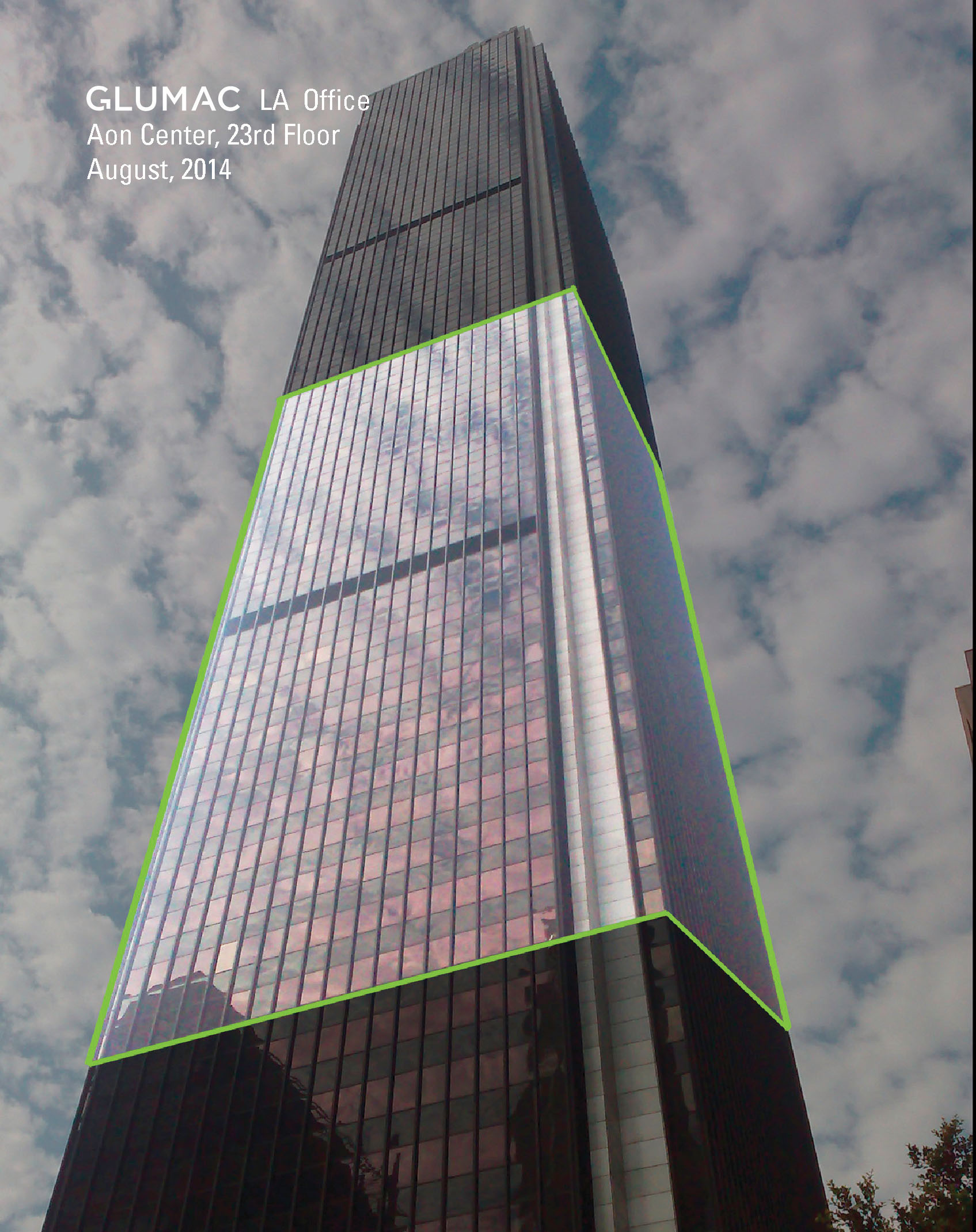
We look forward to beginning the LBC performance period for both offices this summer. Our hope is that these projects set a new precedent for other teams to pursue the Living Building Challenge, whatever the building type or location. We believe in a fully sustainable future across the globe and look forward to celebrating these industry milestones with the certification of both offices in 2015.
To find out more, please contact me at [email protected].
There’s a new and shimmering upscale tourism and retail destination in the heart of Salt Lake City that’s won the attention of city planners worldwide. Some call it “urban renewal on steroids.” Others regard it as just one more extension of the buoyant and optimistic resource that Utah is.
When Salt Lake City planners looked at many options for a revitalization of their downtown area, they wanted ambitious ideas. Today, the mixed-use City Creek Center is the realization of that dream.
The $1.5 to $1.7 billion development is an upscale, open-air shopping center that includes office and residential buildings and a variety of water features developed by Property Reserve, Inc., the commercial real estate division of the Church of Jesus Christ of Latter Day Saints. City Creek is managed by the Taubman Company and City Creek Reserve, Inc. The design teams included architects ZGF, Hobbs+Black, and Callison, structural and civil engineers, Magnusson Klemencic Associates, and consulting MEP engineers, Glumac.
City Creek Center spans nearly 800,000 square feet (20 acres) of downtown Salt Lake City and is part of an estimated $5 billion sustainable design project to revitalize the downtown area.
Smart, by Design
At City Creek Center, mechanical systems were integrated smartly, by design. The mechanical plan was developed by a team of consulting engineers at Glumac’s Irvine, CA office and put into action by the 250-person firm, CCI Mechanical, Inc., based in Salt Lake City. The firm (with revenues of about $60 million annually) is involved in the design, installation, and maintenance of mechanical systems for commercial and industrial facilities throughout the Western United States.
To give you a sense of the enormity of the project, all exterior walkways, stairs and common areas in both of the project’s city blocks are snow-melted. These areas cozy up to the large open or enclosed space of both malls which are fully served with in-floor heating and cooling.
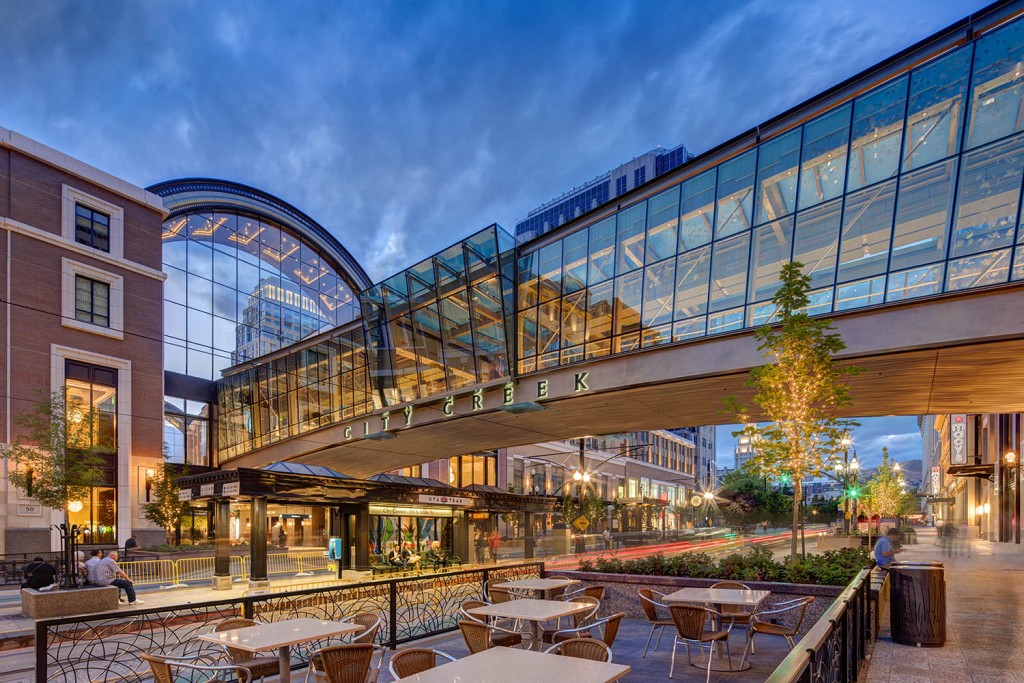
Planners set out to provide environmental control and comfort for two 160,000 sq. ft. retail mall spaces, each connected by an enclosed, environmentally-controlled sky bridge. Each of the malls can be opened to the elements and fresh air, or closed to provide optimal comfort inside, thanks to the automatically retractable roof and wall systems.
Streets of Florence Gold
Steve Straus, president and CEO of Glumac, said that the presiding Bishopric’s “Streets of Florence” vision served as the aesthetic driver for the city’s sweeping renovations.
According to Straus, many design options were looked at over many months, but the one key concept that united people on both sides of a debate and supercharged the project were recommendations by MKA (Seattle-based Magnusson Klemencic Associates, a structural and civil engineering firm) that enabled mall spaces to be both an open-air pedestrian streetscape – what the church most wanted – and also a suburban-style covered mall to encourage all-weather shopping.
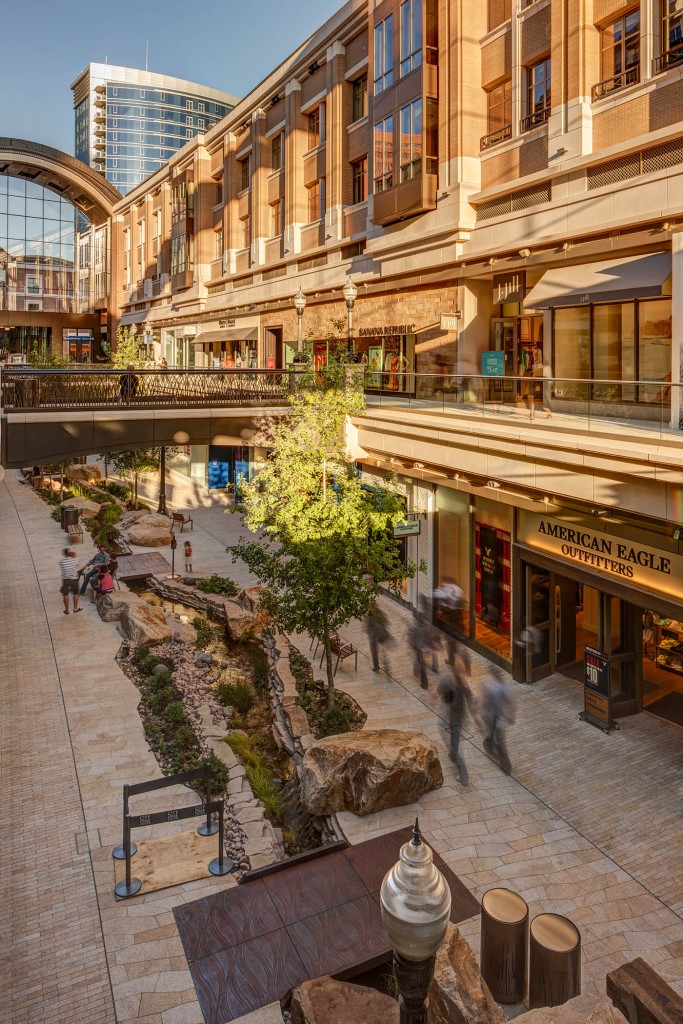
“They came up with the concept of a retractable roof and end walls, offering the best of both worlds,” said Straus.
Shelley Clark, structural engineer and a principal with MKA knew that a clamshell roof design would stick out conspicuously and also wasn’t practical because the site is near the Wasatch Fault where seismic design loads are 25 percent higher than in San Francisco.
Clark sought counsel with Jon Magnusson, MKA’s chairman and CEO. Apparently, it took him only 15 minutes to devise a solution that called for a bi-parting vaulted skylight on rails. Not only would it retract; it would swing out of sight from the concourse below.
“We now see that energy consumption is reduced by
25 to 50 percent when compared to
conventional closed structures.”
The essential structural element was affectionately dubbed the “whalebone.” The clever design, quickly blessed by Taubman managers, proved to be the crucible moment for several other facets of the immense construction project; they fell into place like so many aligned dominoes.
“The retractable design also proved ideal for environmental control, with huge advantages to reduce energy consumption,” added Straus.
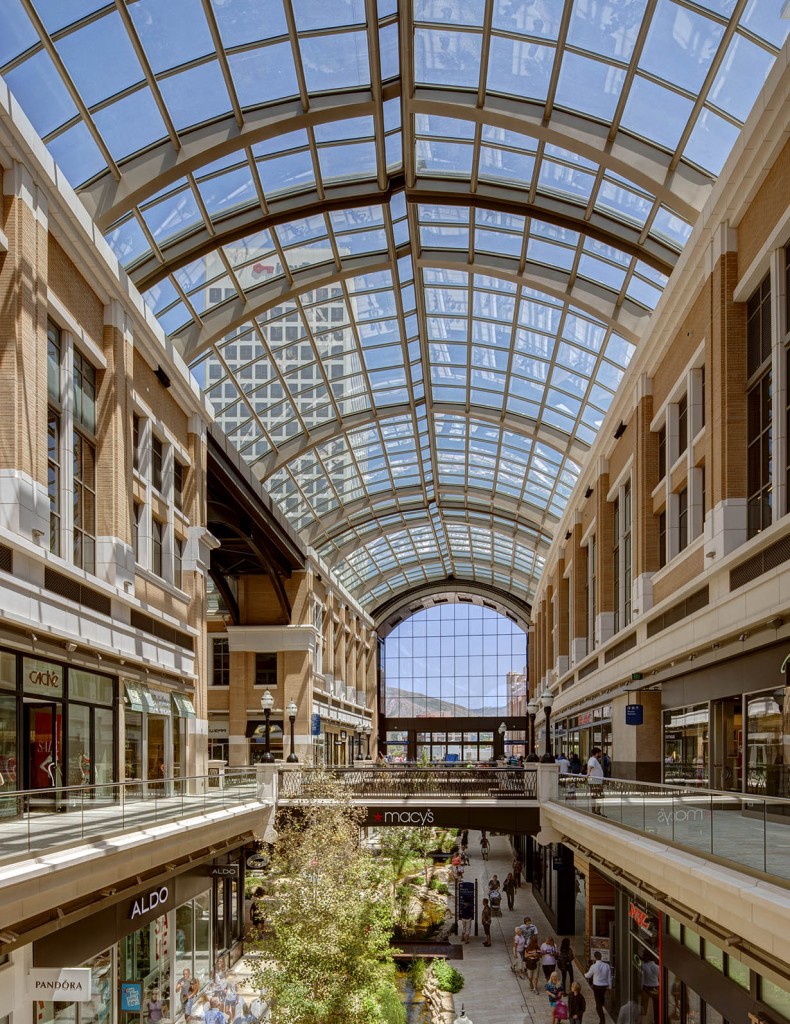
The retractable roof and end wall capability permitted Glumac’s engineers to design mechanical systems around the expectation – now realized – that retail mall areas remain open most of the year, with no call for heating or cooling most of the time.
“We now see that energy consumption is reduced by 25 to 50 percent when compared to conventional, closed structures,” said Straus. “Other success indicators are revenues generated by the stores within the malls, and business is very good.”
The retail areas were awarded LEED Gold status by the USGBC as part of the LEED for Neighborhood Development rating system and also were a “gold” level recipient of the 2013 ICSC (International Council of Shopping Centers) Design & Developments Award in both the “new development” and “sustainable design” categories.
“We wanted to provide optimal comfort while using a minimal amount of energy. A scale model of downtown Salt Lake City was built in a wind tunnel and Computational Fluid Dynamic [CFD] studies were performed to help determine the effectiveness of natural ventilation,” explained Brian Berg, Glumac’s project manager for City Creek Center whose team focused on the retail areas.
“Even with the roof closed, the side walls remain open, natural ventilation was the answer,” he added. “With no air handlers needed for the main galleria areas in each mall 84 percent of the year, it’s easy to see why the energy savings are so substantial.”
Another key concern for Glumac’s mechanical system designers was their desire to conceal most of the equipment – including the 30-foot cooling towers.
“We concealed all of the chillers, boilers, air handlers, outside air fans, most of the kitchen equipment and exhaust fans below the roof level,” explained Berg. The large cooling towers were recessed into the roof so that they were flush with the roofline. The outside air fans that serve the retail areas were rather difficult to fit, but we found ways to do it.
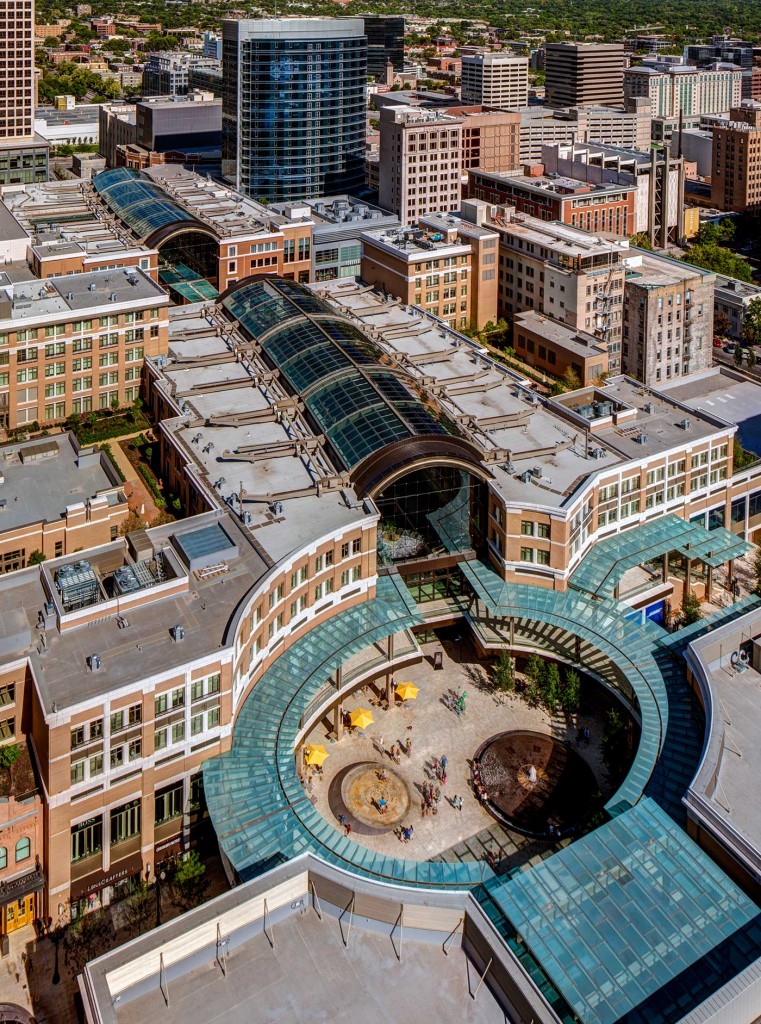
“Today, aerial photos show roofs with mostly-hidden mechanical systems,” continued Berg. “All told, it’s 5,000 tons of mechanical gear ‘buried’ for two reasons: 1.) to be good neighbors so that the adjacent high-rise tenants don’t look down into a mish-mash of mechanical equipment – the owner’s directive from the beginning – and 2.) we had to be sure that our systems wouldn’t obstruct movement of the roof panels.”
Yet, as substantial as the mechanical infrastructure is, a key attribute of the plan was the effort to simplify all facets of the design so that the overall system’s many mechanical parts n’ pieces wouldn’t be strewn across the two city-block-sized space. Fluid systems integrate immense heating and cooling functions, connected through the efficient exchange of BTUs at many levels.
Though there are thousands of interconnected components, and many key mechanical stations, there are arguably two main elements of the vast mechanical systems at City Creek Center. First, there’s the evaporative cooling towers and the water-sourced heat pumps connected to them. And there’s the interior, in-slab radiant heating and cooling systems, and much larger exterior areas with snow-melting capability.
Mechanical Masterpiece
“Naturally, we’re very proud of the work our crews did at City Creek Center,” said CCI’s Dave Katsanevas, vice president and senior partner. “Considering the overall scope and magnitude of the job, the duration of the project, and the involvement of many people at CCI, it’s been very rewarding for us to see it come to fruition this way.
“When we walk those snow-melted pavers while shopping in the winter, we have a unique understanding of what’s involved,” he added. “In the cold months, it’s easy to imagine all of the interconnected parts, and the mechanical systems serving tubing below.”
And, in the summer, when the roof is closed, the same network of tubing – while engaged in the business of radiant cooling – wicks away heat almost unnoticeably.
“Radiant cooling is amazing,” concluded Katsanevas. “The source of comfort – just as it is with the heat for winter snowmelting – comes from equipment that was installed with care by a fine group of professionals who I’m proud to work with. The mechanical systems perform just as designed, according to a system design that works amazingly well, a masterpiece.”
To the passerby, the Vestas Headquarters in Portland’s Pearl District, looks like a simple, modern commercial building converted from a historic block structure. Hidden beneath the surface, it is in fact one of the highest performing office buildings in the country.
Renovated from the old Meier & Frank warehouse into Class A office space in 2012, the Vestas North American Headquarters is a leader in energy savings. While the average office tenant in the North West pays around $1.60 per ft2 in annual energy costs, the Vestas North American Headquarters’ cost of energy is below $0.50 per ft2. In 2013 alone, annual energy costs are just $0.45 per ft2, helping the owner improve their bottom line.
After nearly two years of operation, Vestas is consuming approximately 70% less energy than a conventional office building in the Pacific Northwest, making it one of the most efficient large office buildings in the entire country. The building achieves these benchmarks mostly from a dual path HVAC system, efficient lighting design, a rooftop solar electric system and a building performance dashboard. The result was a LEED Platinum designation, an Energy Star score of 99, and the International Living Future Institute’s (ILFI) energy efficiency REVEAL label, making this historic Portland landmark the most energy-efficient building on record in 2014 in the United States.
Dual Path HVAC
The innovative HVAC system is responsible for 40% of the energy savings. Fresh air is supplied through an underfloor air distribution system, with individual air control at each desk. A supplemental system maintains thermal comfort in each local area using a variable refrigerant flow system. The HVAC system uses less than half the energy of a conventional variable air volume system used in most office buildings across the country.
This HVAC system is a variation of a dual path system and is becoming a common approach for low-energy use buildings. A dual path system separates control of outside air for ventilation from a local thermal comfort system that maintains occupant comfort. As a result, the building only uses energy to maintain comfort when and where it is occupied. Dual path systems have been used at the Portland Mercy Corps Headquarters, two buildings on the PCC Cascade campus, and the Edith Green Wendell Wyatt Federal Building in Portland, OR, and the Experience Music Project Launchpad building in Seattle, WA. All of these projects represent the newest standard in achieving low-energy use in Pacific Northwest office buildings.
Lighting Design
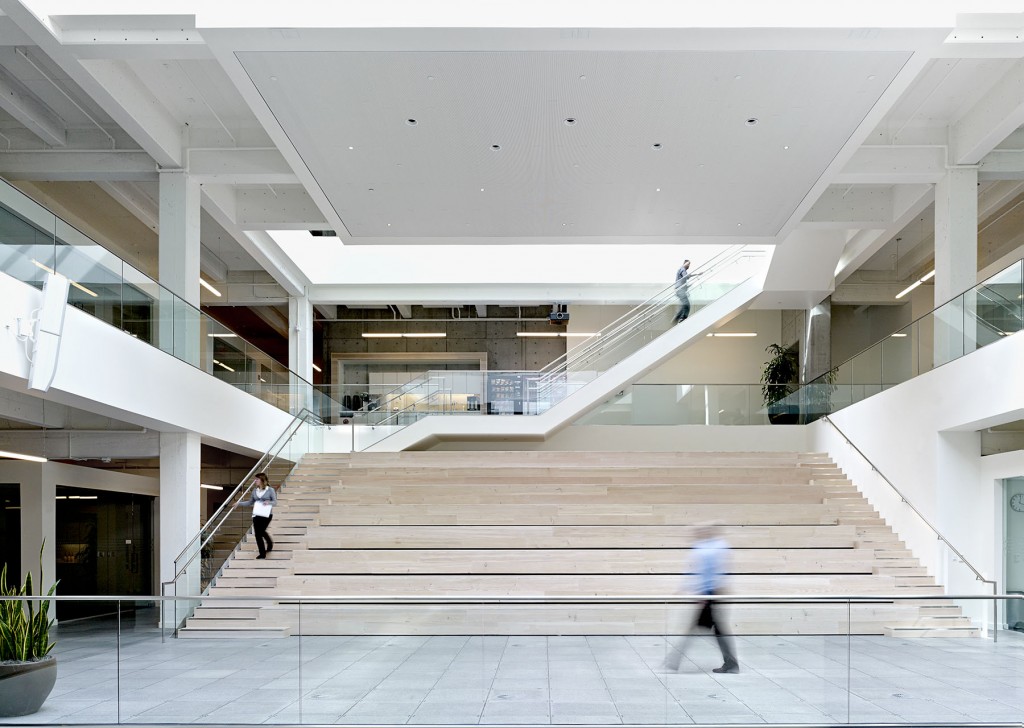
The lighting design accounted for 15% of the energy savings. The design focused on providing enough ambient light for the space, but with local task lights at the desks that allow staff to adjust light levels to their individual needs. Typically, offices provide lighting for all needs in all areas all the time, which results in excess power consumption. In this case, daylight dimming controls were integrated into the ambient lighting system as well, in order to use artificial lighting as a supplement to natural light from outside. Perimeter windows maximize natural light and the atrium draws light into the core of the building. As a result, the total lighting energy consumed is approximately 75% less than a conventional office building.
Solar Photovoltaic System
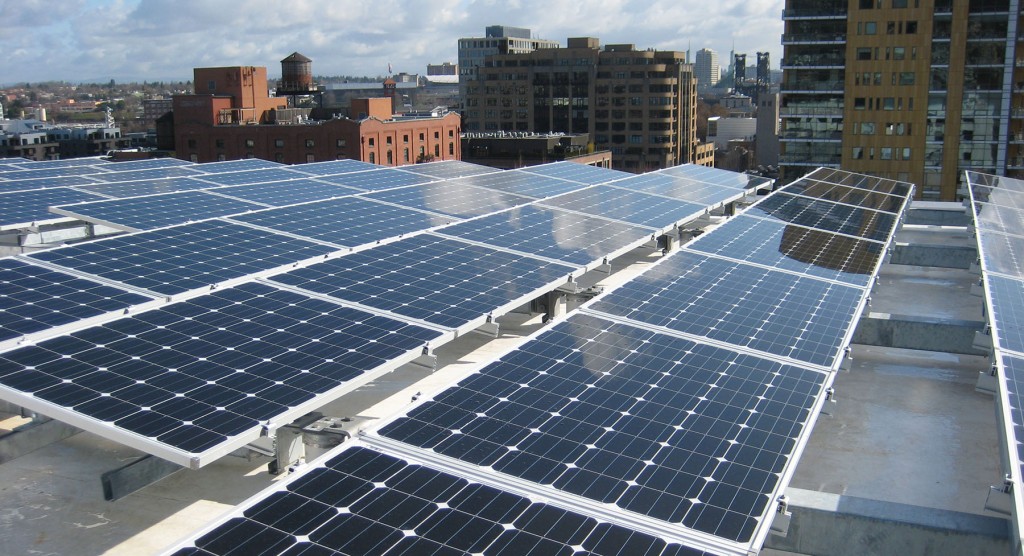
A 125 kW solar array provides 10% of building energy use each year. The system occupies approximately 16,000 sqft of the roof outside the fifth floor penthouse. Occupants can see the renewable energy system outside their windows, and energy production is visible via the Building Performance Dashboard.
Building Performance Dashboard
The utility dashboard has been a key part of attaining actual energy savings. The system, provided by DECK Monitoring, helps building staff better understand electricity, gas, and water consumption in the building. After six months, the building was on track to perform as expected with an Energy Use Intensity (EUI) of 37 kBtu/ft2. Using the data, Glumac worked with building staff to understand operations and where further savings could be achieved. This resulted in an EUI of 23 kBtu/ft2, an additional energy savings of 20% in an already high-performance building and almost $30,000 annual savings in operating costs.
As the commercial real estate market begins to renovate aging, historic buildings across the Pacific North West, following the Vestas system blueprint can be a successful strategy for building owners. The Vestas building systems infrastructure is smaller, thereby maximizing usable square footage. The integrated daylight dimming controls create more inviting work spaces while upholding a commitment to sustainability. Finally, the robust monitoring helps to maximize savings and ensure that they continue over time. This design approach helps create the modern office space which is in high demand in the current real estate market while repurposing the existing built environment. The project team consisted of:
- Owner: Vestas North America
- Developer: Gerding Edlen Development
- Shell Architect: GBD
- Interior Architect: Ankrom Moison Architects
- Shell GC: Skanska
- Interior GC: Howard S. Wright
- MEP Engineers: Glumac
To learn more about energy saving solutions for your building, contact Mitch Dec at [email protected].
The International Living Future Institute (ILFI) Net Positive Conference in San Francisco this February presented a vision for the environmental performance of buildings that is challenging for many to embrace. The idea of net-positive development, in which a building and its occupants consume less energy, food, clean air, and water than is collected or produced on site, is inherently challenging. In an industry that is still struggling to embrace net-zero energy, the notion that the built environment can be regenerative seems a world away.
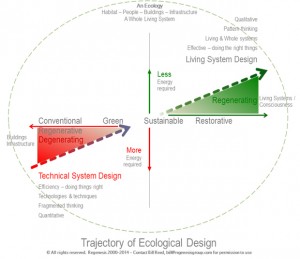
After listening to the green building industry’s best and brightest minds, it seems the key barrier to broader adoption of net-positive development is the perception of it being infeasible or unattainable. An alternative perspective is that pursuing net-positive development is our only rational choice, since conventional building practices significantly degrade our quality of life over time. Incorporating toxic chemicals, using natural resources as if they are unlimited, and creating ever-growing piles of building waste is not sustainable. Our survival as a species literally depends on changing our approach.
“Pursuing net-positive development is
our only rational choice…”
The Living Building Challenge (LBC) is a green building standard that applies metrics for net-positive development by holistically addressing site, water, energy, materials, health, equity, and beauty. While the LBC may be seen as a niche certification that requires a firm commitment to sustainability, it is in fact achievable and offers an attractive triple bottom line. For this reason, the ‘challenge’ can be seen as an opportunity, rather a limitation. Often the ultimate barrier is changing how we view things, rather than advancing technology or refining economics. To help break down the perception of the LBC as a hindrance, we outlined three strategies that support a shift in perspectives and behaviors for a net-positive future.
Think Cyclically
The first step is to think cyclically. Every action has an equal and opposite reaction. Energy in equals energy out. At the beginning of design, it is essential to comprehend all the inputs of the system and the outputs they may create. For example, when a city taps a watershed for drinking water, the watershed should be recharged with water of similar quality as when it was extracted. Polluted, deoxygenated, hot water is not an equal exchange for clean, oxygenated, cold water. Incorporating this parameter changes the flow of inputs and outputs within that system. If at the end of a process you don’t start back at the beginning, try again. Close the loop.
Promote Diversity
The second step to achieving regeneration is to promote diversity. This means diversity within the design team, diversity of building products used, and diversity of engineered solutions. Life inherently thrives on diversity; it generates resilient, beautiful, and effective outcomes. More options mean more solutions. Any system, building, community, or ecosystem becomes stronger and more robust when it becomes more diverse. We can use this idea as an analogy for the design team. Imagine the input that one person with a single background can provide to a project versus the input from a group of people with various backgrounds. Undoubtedly, the latter provides a much stronger opportunity for holistic, multi-faceted, integrated, and effective design.
“Do the hard work of finding synergies and making connections between systems.”
Seek Integration
The third and most important step is to seek integration and do the hard work of finding synergies and making connections between systems. This applies to all parties. Everyone must be interconnected, yet accountable. Wouldn’t it be great to see power and water utilities both connecting to the same SmartGrid? Wouldn’t it be great if manufacturers based their business model on something other than the bare minimum required by code? Simply showing up is not enough. Embrace the challenge. Do the work.
By implementing these approaches with conscious awareness, net-positive solutions all of a sudden become achievable. At Glumac, we are passionate about sustainability and driving the dialogue on green buildings that work. This is why we are making investments to obtain building performance metrics (closing the loop), to engage regulatory agencies (diversifying the team), and to provide educational outreach within our local communities (seeking integration).
To join the conversation and find out more, write me at [email protected] or visit our Facebook, Twitter, and LinkedIn pages.
In a high-performance office building, lighting can account for 20% of energy use. Properly applied, lighting controls can easily reduce that portion by 25%. But, as with any high-performance strategy, there are subtleties to the technology and application. In this article, we’ll explain the basics of occupancy sensors and their important counterpart, the vacancy sensor.
Occupancy sensors have been around for decades and, when used correctly, can be a highly efficient means for saving energy, reducing light trespass, increasing security and lamp life, and decreasing fixture maintenance. However, when using some of the older technology sensors or when using sensors in inappropriate conditions, the results can be undesirable and uncomfortable for occupants.
Because of inappropriate use of inferior sensor technology in the past, there is a perception among users that occupancy sensors do not work well. Newer technologies are rapidly turning that perception around to where we see virtually no occupant complaints regarding sensor use. The widespread use of dual technology sensors have almost completely eliminated the common misperception that the lights will turn off while an occupant is present but sitting still. Below is a discussion of the basics of occupancy sensor technology.
Passive Infrared Motion Detection
Passive Infra-Red (PIR) occupancy sensors are best for detecting major motion like an occupant walking through a space. PIR works by detecting movement of heat sources in the space. It only detects heat in its direct range of view.
Advantages: Cheap, small form factor, low power requirements and great for wireless applications.
Limitations: Coverage is directional and limited to line of sight; detects only major movement and so are prone to a false-off.
The illustration below shows where a PIR sensor would detect major motion and trigger lights in an open-office space. The benefit is that a person walking in the room next to the space would not trigger the lights to turn on, but the drawback is that only major motion is detected.

Ultrasonic Motion Detection
Ultrasonic technology in occupancy sensors is excellent for minor motion detection. This makes ultrasonic a good option where small movements such as typing at a computer desk take place for extended periods of time. Ultrasonic works by emitting a pulse into the space and receiving the bounce back. When there is movement in the space, the bounce back is read differently and the sensor knows there is movement in the space. This technology is capable of ‘seeing’ around corners.
Advantages: Can ‘see’ around objects, detects minor movements.
Limitations: Requires location specific commissioning, higher power requirements, prone to false-on triggers.
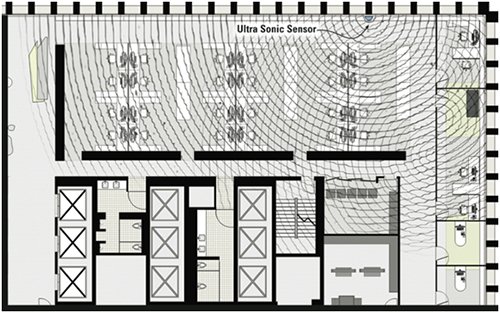
The illustration below shows the much broader sensing area of an ultrasonic detector – compare to the PIR illustration above.
Dual-Tech Motion Detection
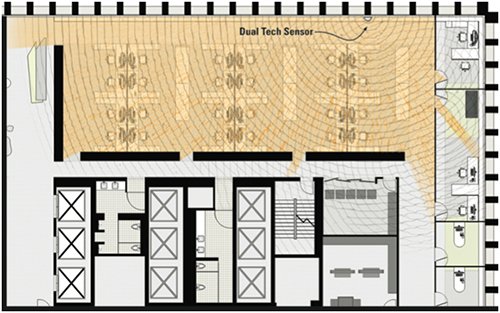
Dual-tech combines both Ultrasonic and PIR sensor technologies to provide optimal detection, with minimal ‘false alarms.’ The occupancy sensor will not turn on the lighting until both PIR and Ultrasonic elements are triggered. The benefit here is that the minor motions of typing at a computer are picked up with the ultrasonic technology, but the lights aren’t turned on from a person in a different room based on ultrasonic bounces. In addition, once the light is turned on the sensor only needs one of the technologies to keep the lights on. This helps ensure the lighting is not turned off while the occupant is in the space.
Advantages: Detects both major and minor movement, limits false on and false off.
Limitations: higher price, though the discrepancy is small and diminishing.
Key Insight: Occupancy vs. Vacancy Sensors
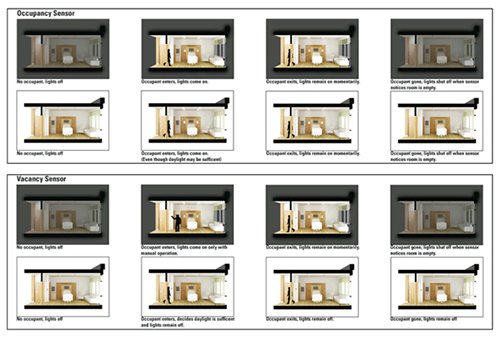
Use of occupancy sensors in a daylit space can mean that lights come on when they are not needed. In these conditions, a change of the control sequence can shift the operation from an occupancy sensor to a much more useful vacancy sensor. Vacancy sensors assume that a user will turn the lights on manually, typically via a wall switch. The vacancy sensor will then monitor the space to turn lights off if the space is then vacant for a specified length of time.
Occupants in daylit spaces often need no additional electric lighting to perform basic tasks. Glumac lighting designers have found that lighting energy use will decrease when users are given control of their lighting and access to daylight because lights will only be turned on when needed. Further, sensor operation in a vacancy sensor scenario is much less obtrusive than an occupancy sensor. The only time users should notice that there is sensor control is when they come back to a space to find the lights turned off automatically.
Using the standard “automatic-on” occupancy sensors within most spaces that have no natural light makes sense because the lights should always be needed when someone enters, as there is no other light source in the space. But for spaces with daylight, the “automatic-off” of vacancy sensors is typically preferable.
Recommendations
The goals of integrating appropriate lighting controls into any design are to improve comfort and usability for occupants, and to decrease lighting energy use. When properly understood and applied, occupancy and vacancy sensors can do both. To sum up the basics:
- Seek dual technology sensors whenever the budget allows.
- Dual-technology occupancy sensors are recommended in most interior spaces with no available daylight.
- Dual-technology vacancy sensors are recommended in most perimeter spaces with available daylight.
In a future Sustainability Matters issue, we’ll continue the discussion with an article on the intricacies of daylight sensors and automatic dimming.
For more information on lighting, please email us at [email protected].
The USGBC (U.S. Green Building Council) was founded in 1993 with the mission “To transform the way buildings and communities are designed, built and operated, enabling an environmentally and socially responsible, healthy, and prosperous environment that improves the quality of life.” This is a lofty mission to be sure. Their vision statement goes even further, stating “Buildings and communities will regenerate and sustain the health and vitality of all life within a generation.”
In 2000, the USGBC unveiled a certification system, known as LEED (Leadership in Energy and Environmental Design). In the thirteen years since its inception, LEED has helped transform the way we think about designing and operating buildings. Their four-tiered certification system rates buildings according to expected environmental performance as Certified, Silver, Gold, or Platinum. Moving from one tier to the next through a point system, a primary focus is energy reduction. As the design becomes more energy efficient, points are gathered. Since Platinum is the highest goal, many people treat this as the “destination.”

From an energy and water standpoint, careful examination of the USGBC vision statement brings us to an interesting observation. The ultimate vision is to build buildings that will “regenerate.” That is, they need to give back to the energy grid or the surrounding ecology, not only impose less impact or be neutral. Even a LEED Platinum building does not achieve this goal. With the exception of the sun and wind, the resources we use to power and/or heat our buildings are finite. Arguments abound as to whether any particular resource will last 5, 10, 50 or 100 years. But, one thing is not debatable: we will eventually run out of these resources. So, while LEED Platinum buildings will slow the inevitable march towards depletion, it will not avoid it entirely.
Therefore, we need to go “beyond LEED” and beyond thinking of LEED Platinum as a final destination, but rather as one of the many “off ramps” on the journey to a sustainable and restorative built environment.
How do we do that? Through the Cascadia Chapter of the USGBC, a new metric, called the “The Living Building Challenge” (LBC), was developed. This challenge is to design a building that generates all of its own energy with renewable resources, captures and treats all of its water, takes care of occupants, and is aesthetically beautiful. A “living” campus or neighborhood scales these solutions appropriately to size and function. The Living Building Challenge uses the metaphor of a flower as its unifying theme. The flower’s petals are: Site, Water, Energy, Health, Materials, Equity and Beauty.
Even when we have the ability to meet this challenge consistently with new buildings, we will still only partly on our way to sustainability. Why?
In actuality, retro-fitting the older buildings is far more cost and energy effective than building new.
As noted within USGBCs vision statement, “Buildings and communities will regenerate […].” In the United States, there is 60 billion square feet of built space constructed prior to 2000. The vast majority of this space is not at all energy efficient. Much was constructed prior to the existence of LEED. Even more was built prior to the energy crisis of the 1970’s. Unless we tear down and rebuild these structures, which is entirely unlikely, the new buildings we design and build will need to make up for the inefficiency of these older buildings. Accordingly, new buildings will need to be regenerative. What the older buildings take from the utility grid, these new buildings will need to give back.
In actuality, retro-fitting the older buildings is far more cost and energy effective than building new. A study published in 2011 entitled “The Greenest Building: Quantifying the Environmental Value of Building Reuse” published by Preservation Green Lab in Seattle, WA, with help from the USGBC Cascadia Chapter, Skanska, Green Building Services and others revealed, “Building reuse almost always yields fewer environmental impacts than new construction, when comparing buildings of similar size and functionality.”
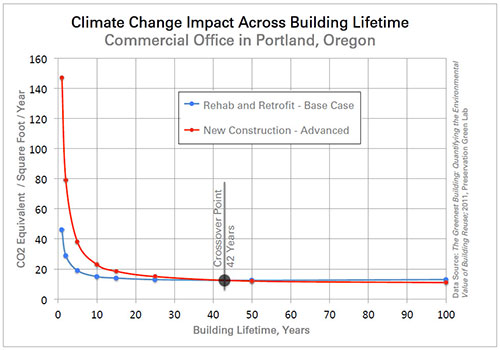
The report goes on to state, “The range of environmental savings from building reuse varies widely, based on building type, location, and assumed level of energy efficiency. Savings from reuse are between 4 and 46 percent over new construction when comparing buildings with the same energy performance level.”
These impacts may seem small, but, as stated in the study “if the city of Portland were to retrofit and reuse the single-family homes and commercial office buildings that it is otherwise likely to demolish over the next 10 years, the potential impact reduction would total approximately 231,000 metric tons of CO2 – approximately 15% of their county’s total CO2 reduction targets over the next decade.”
This report finds it takes 10 to 80 years for a new building that is 30% more efficient than an average-performing existing building to overcome, through efficient operations, the negative climate change impacts related to the construction process. For a commercial office building in Portland, that figure is 42 years.
So, we still have a long way to go in constructing restorative buildings and becoming truly sustainable.
Green Building – Going Beyond LEED Certification
LEED has made great strides in creating awareness of green building technologies. It has performed its function of market transformation as well. Products and processes that weren’t common in 2000 are now standard practice. That said, in some respects LEED has diverted our attention from the more fundamental and critical questions: What is truly sustainable? How do we get there?
The answer is one step at a time and one building at a time. But, as the above graphic illustrates, we cannot continue with the status quo. Resource depletion will continue while resource demand will increase. LEED postpones the catastrophe point. The Living Building Challenge implemented at individual building scale will also postpone the inevitable. Only through widespread application of The Living Building Challenge can we avoid the catastrophic cliff ahead of us.
Two years ago, we wrote about Glumac’s Commissioning work at the University of Oregon Duck’s new 12,541-seat Matthew Knight Sports Arena in Eugene, Oregon. The project was designed by a world-class architectural and engineering team. While most sports facilities are just designed to code, this facility was shooting for LEED® Silver and Glumac encouraged the team to actually achieve LEED Gold. Glumac commissioned the project throughout construction and made sure systems and equipment passed rigorous functional tests so the arena would be handed over to the University in fully operational condition. When the University took occupancy of Matthew Knight Arena, it wasn’t just “good,” it was already “great!” At that time, we said “Glumac continues to work with the University of Oregon monitoring the Arena’s energy use – improving operability and reducing maintenance costs.” This is still true today and the results are still “great.”
We all know how the story too often goes: the moment the owner moves in, problems begin. Spaces seem uncomfortably hot or cold to one occupant or another. Complaints are made to the facilities department. Programmed thermostats and controls are adjusted up or down to quiet the discontent. Equipment fails for one unforeseen reason or another. Individual items are altered, repaired or replaced. Building operations manuals become outdated with every tweak, adjustment, and change. Facilities personnel can’t help losing sight of the facility’s original intended operations protocol. Little by little, the facility’s energy efficiency begins to decline. Right?
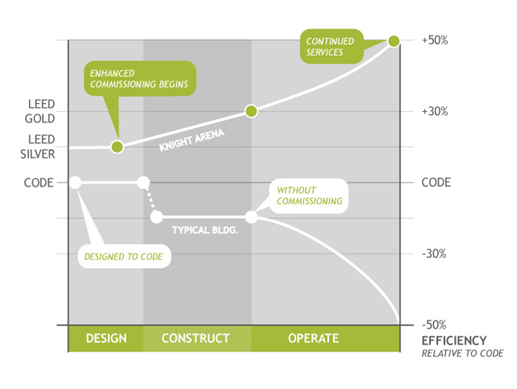
No way! In the case of Matthew Knight Arena, the opposite story has occurred. Today, rather than saving 30% more on energy costs than the typical arena on a per-square-foot basis as was the University’s original intent, the Matthew Knight Arena is saving more than 50% on energy costs. Continuing services by Glumac have helped make the difference.
Boosting the Arena’s operations effectiveness, Glumac commissioning agents Kevin Dow and Ed Helbig have remained available on-campus and on-call for the past two years, providing ongoing commissioning services. This includes fine-tuning systems and helping the arena run smoothly in any condition including unusual weather and occupancy situations. Kevin gives significant credit to the university facility operations team’s proactive programming and involvement. Detailed knowledge of the building systems is also critical, and University of Oregon personnel excel in this knowledge.
The University’s operations team was beside me during construction, learning as the new equipment was started-up and tested for functionality. At project completion, they were trained on the building’s equipment by the contractors and equipment manufacturers, and they developed an understanding and appreciation for the facility systems manual we assembled for them. All of the training was videotaped so future facilities personnel also benefit from the training.
– Kevin Dow, Commissioning Agent, Glumac
Continued Services provided by Glumac have included:
- Troubleshooting and answering facility staff questions
- Monitoring energy use
- Systems testing and modification for unusual circumstances
- Controls refinement
- Commissioning of equipment and systems added post construction, such as replacement controllers
The Matthew Knight Arena project’s three-pronged attack on energy consumption includes: 1. Great design targeting LEED Silver certification; 2. Enhanced commissioning coaxing the design and construction even further to achieve LEED Gold certification; 3. Ongoing commissioning to ensure the arena is constantly operating as intended, while utilizing the least possible energy. With this equation, the Matthew Knight Arena’s energy consumption is far lower than typical, with energy cost savings that have surpassed the University of Oregon’s expectations.
Owner: University of Oregon
Project Cost: $227 million
Construction Cost: $195 million
Completion Date: January, 2011
Design Architect: TVA Architects
Executive Architect: AECOM Ellerbe Becket
Design Engineer: Henderson Engineers
Contractor: Hoffman Construction Company
Over 40 years ago, the Sokol Blosser winery began its journey to becoming a world-class vineyard and an industry leader in sustainability. They had a passion for growing Pinot Noir grapes and creating fine wine which helped shape Oregon’s now-prominent wine industry. They also had a commitment “being good to the earth” and striving for sustainable design and operation of their winery. This standard has led to the recent launch of their new wine-tasting room that is pursuing the Living Building Challenge Petal Recognition, including net-zero energy efficiency.
The Living Building Challenge is just that – a challenge. Well-known in the industry, The Living Building Challenge is a green building philosophy, advocacy platform and rigorous certification program. To date, only four buildings in the world have received full Living Building Certification and just three others have received Petal Recognition. Fortunately, the difficulty of the challenge centers around achieving measured results, not to adhering to a rigid design process. Certification or Petal Recognition is only awarded after energy performance is proved, which requires continuous occupancy and energy data over a minimum of 12 months. For Sokol Blosser, achieving the Petal Recognition with a focus on net-zero energy was a priority. Because the challenge’s requirements are so rigorous, it takes a strong commitment from the owner along with a competent and communicative design team to see it through.
Sokol Blosser, Allied Works Architecture and Glumac’s energy engineering consultants worked together to create this world-class, sustainable space. To target design for Petal Recognition, the first step was to look at Sokol Blosser’s energy consumption and ability to generate energy through existing on-site photovoltaic (PV) arrays. Based on analysis of the panels’ past production and the project building area, Glumac determined that the existing array could produce enough electricity to support a building energy use intensity (EUI) of just 20 kbtu/sqft. For the engineers and architects among us, this is a tight budget for any building.
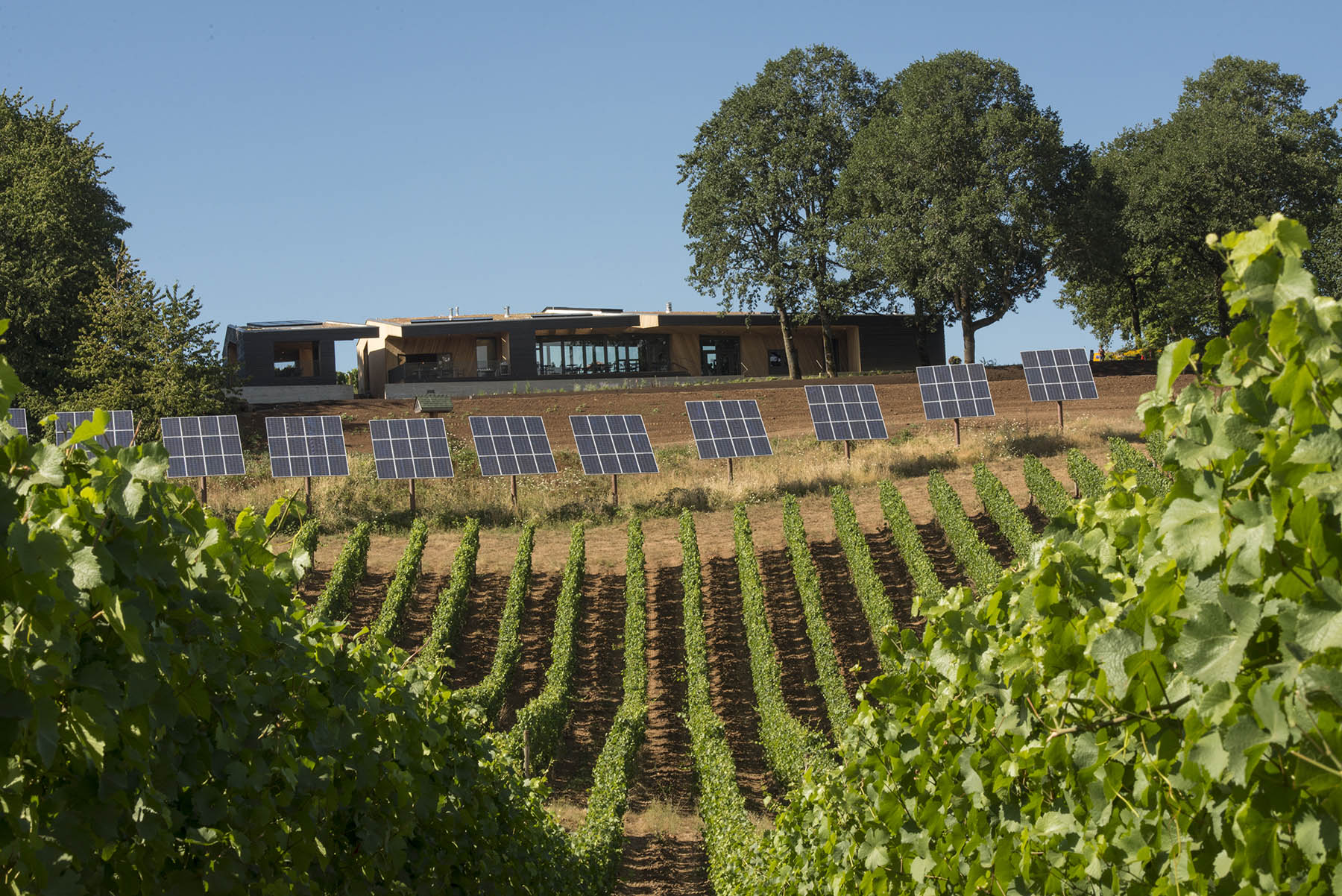
Estimating consumption was the next step. Glumac’s goal was to support Allied Works and Sokol Blosser achieve their design and energy goals by providing a road map for how to use their capital in the most efficient ways. Working from historical data and future operational plans for the space, Glumac outlined estimates of how much each system would consume and provided suggestions for how those systems could potentially be improved. The largest energy consumption sources were the HVAC system and lighting fixtures. Focusing on these items, Glumac identified that lighting upgrades could shave 10% off the total energy use, that a higher efficiency HVAC system could reduce consumption by an additional 3-5%, and finally how much PV could be potentially added to build in greater energy generation capacity.
Following these recommendations and a minimum of 12 months of energy data, Sokol Blosser will be on target for achieving the goal of net-zero energy and further establishing their green leadership in the wine industry. Congratulations to Allied Works Architecture’s beautiful design and Sokol Blosser’s commitment to pioneering a sustainable vision…and of course to their fantastic wine!
For more information about achieving net-zero building performance, you can reach us at [email protected].
“Medical offices are at the front line of healthcare delivery, with the emphasis on primary care and medical homes. Going forward there will be much more care and prevention done in medical offices than in past.”
~ Karl Sonnenberg, architect, Zimmer Gunsul Frasca Architects LLP
On May 22nd, a panel of five healthcare experts and 200 AEC industry leaders came together in Portland for an engaging discussion on the future of the Medical Office Building (MOB). The event, sponsored by Glumac, was StraightTalk’s MOB of the Future, was formulated to point the way for an industry facing major changes. Panelists offered a range of perspectives, including insights from a physician, architect, developer, contractor and engineer.
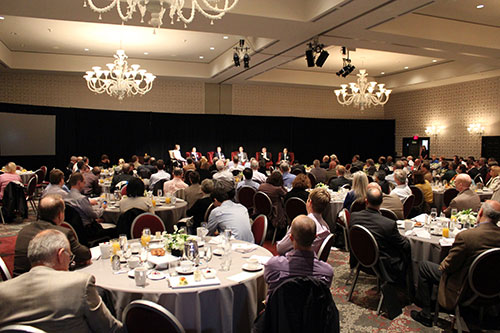
Open enrollment under the Affordable Care Act will begin in October 2013, giving an estimated 30-35 million currently uninsured users access to healthcare (1). Over the next decade, 78 million baby boomers approach retirement and will increasingly have additional medical needs (2). Demand for health services will grow significantly, and the type of care required will vary from today’s mix. Meanwhile, the cost to construct and operate hospitals continues to climb and provider budgets are tighter than ever. With these huge shifts in demographics and economics, healthcare needs to be more efficient, affordable, and accessible. The panel’s discussion uncovered three themes to watch for in MOB design and construction: accessibility, affordability, and sustainability.
Accessibility

As patient volumes swell, hospitals will struggle to make care accessible to more people. In response, there will be more integration of services in the community. Non-urgent services, such as out-patient surgeries, consultations, and therapies, will move out of the hospital and move closer to where patients live and work. This decentralization of infrastructure, distributed and closer to consumers, will harness less expensive facilities, built at a far lower cost than new hospital space.
To provide the right care at the right time, doctors will use a multi-disciplinary team approach. Architects need to design open floor plans to create “collaborative pod” settings that facilitate cross-discipline communication. Panelist Karl Sonnenberg, Architect, ZGF Architects, explained that such flexibility could be achieved by minimizing “monuments” in the middle of the building such as mechanical shafts, columns, stairs and elevators. The result creates open flexible space that allows for collaborative space where caregivers can communicate freely and work in teams.

Panelist Dr. Ruth Chang, Physician Service Area Director and Family Medicine Physician, Kaiser Permanente, highlighted the importance of integrating technology with patient services to improve access to healthcare. With digital record systems, physicians will be better able to access a patient’s comprehensive medical history and can balance face-to-face care with remote service capabilities to better accommodate patient lifestyles. To empower patients and promote lifelong health, there will be more ancillary services centered on preventative care and proactive wellness, such as fitness and dietary centers.
Technology will also add flexibility and accessibility for the patient. Remote care, delivered through innovative technologies (i.e. internal diagnostic devices, apps, and web-based consultations), will enable patients to receive care without having to physically visit a provider. The concept will also help to reduce the cost of care and allow patients the flexibility to receive care in ways with which they are comfortable. Dr. Chang, however, felt this will never fully replace face-to-face care. She explained that doctors will still need to examine patients in person. Also, the human relationship element that can speed the healing process is often gained only through personal interaction.
Affordability
Panelist Mike Denney, Managing Director, Healthcare Services, CBRE Group, Inc., offered a planning perspective for the MOB. He explained that providers need to be thinking like a business, focusing on controlling costs any way they can. They can do this by consolidating, renovating, and/or clustering related services across their MOB portfolios. Providers are moving many services out of the hospital to leave resources for acute care and providing select services where providers can better manage cost/sq ft for operations and cost/sq ft delivered.
Panelist Chip Cogswell, National Healthcare Director, Turner Construction added that while construction today is largely stick-built, there are strategies to bring costs down further. To minimize costs and delivery time, contractors are streamlining the design and construction process through the design-build delivery method, working with prefabricated modular building design, and using lean methods during construction.

In addition, he sees providers packaging MOB plans to accomplish these goals; Cogswell recalled one instance where the “architect was paid once for three hospitals.” Speaking to lean construction, he also described time and motion studies that tracked how many operations per hour a construction worker could perform using different techniques. The results of such process studies help cut away inefficiencies, reduce costs and speed up completion of MOB construction.
Sustainability
Because of the focus on human health and fiscal responsibility, there is a strong case to be made for sustainability in MOB design and planning. Sustainable engineering solutions, such as energy modeling, advanced controls, and daylighting, enable facilities to operate cost-effectively and provide optimal patient comfort.

Panelist David Summers, a Principal with Glumac, explained the importance of addressing building envelope performance first, to reduce building energy demand, complexity and cost of mechanical and lighting systems, and improve the financial feasibility of onsite, renewable energy generation. He explained, “The challenge is to find ways to improve energy and water efficiency without increasing first cost. For example, we designed for Kaiser in Southern California where we were able to deliver a Net Zero and LEED Platinum building at a cost premium of only 10-15%.” By designing for efficiency up front, informed by energy modeling, energy loads can be minimized. Other creative methods for reducing first cost include selecting systems appropriate for the regional climate, targeted use of LED lighting, and Power Purchase Agreements through third-party-owned renewable energy systems.
Doing More with Less
The MOB faces changes and challenges with competing demographic, political and economic factors. The MOB will have more users with varied needs, tighter design and construction budgets and timelines, and a greater need for comfortable, functional spaces that support health and wellness. These factors reinforce the need for accessible, affordable and sustainable MOB design and construction.
To achieve this, strategies include reducing operational costs through energy efficiency, simplifying design and construction through modular and lean solutions and creating environments that facilitate patient-centered care. In sum, designers and contractors of MOBs must collaborate to create better buildings that do more with less, “complement our environment and enhance our communities (3).”
(1) “What’s Changing and When: Open Enrollment in the Health Insurance Marketplace Begins.”HealthCare.Gov. Web. 01 June 2013. http://www.healthcare.gov/law/timeline
(2) “The Rising Health Care Needs of Aging Baby Boomers.” TopTenReviews. Web. 20 June 2013. http://medical-careers-review.toptenreviews.com/the-rising-health-care-needs-of-aging-baby-boomers.html
(3) “About USGBC.” US Green Building Council. Web. 19 June 2013. http://www.usgbc.org/about.
To learn more about MOB of the Future design and sustainable engineering solutions, email us at [email protected] or call 503.227.5280.
To Design to Nature, Understand Function First
What is the function that you are designing for? That is the first question every engineer should ask when beginning a new project. The function of a ventilation, electrical, or plumbing system for example, must be understood up front or the resulting design will not truly serve the needs of occupants. Identifying the function, essentially tailoring the design to fit the needs of the user, is a key design criterion of green buildings. Interestingly, it is also a key design criterion of nature.
The Biomimetic Approach: From Function to Solution
Biomimicry is about “mimicking” functions in nature and the mechanisms behind them to provide solutions to human problems. Trained biomimicry practitioners, called Biologists at the Design Table (BaDT), understand the importance of designing to function first. Function is what guides a search of the natural world for solutions serving the same function. A BaDT may find solutions from natural forms, processes or at the system scale. For example, if the challenge is natural ventilation, the question might be: “How does nature circulate air?” Using the word “circulate” as the function, the BaDT might find solutions by studying how air circulates around the globe through temperature gradients and energy from the sun. An example of inspiration from a smaller-scale natural system is the Eastgate Centre building, located in the hot desert environment of Harare, Zimbabwe. The design for this naturally ventilated building was inspired by the way termites maintain a constant temperature in their mound by opening and closing vents and exhausting hot air via a tapered chimney.
Biomimicry applied to building design is an emerging practice, and there are few built examples, especially in the U.S. Prominent examples abroad include the Lavasa city development in India, the Ministry of Municipal Affairs & Agriculture building in Qatar, and designs by the London architecture firm Exploration. The lion’s share of biomimicry work is actually found in the product industry. Lofsee Co., Ltd. has created an exterior shading system that mimics the dappled light and cooling effects of a tree canopy. And, Arnold Glas has designed a high-performance window product that minimizes bird strikes due to a special coating that is visually prominent only to birds. There are more examples of biomimicry in the product industry because it’s easier to isolate the intended function of the design. For buildings, however, it is trickier since there are many interrelated systems at play. This system level of understanding is in its early stages of biomimicry application. But, biomimicry’s greatest leverage point may well be in large-scale developments, such as a blocks, districts or neighborhoods.
From Challenge to Opportunity
Our challenge and opportunity is to figure out how to scale-up the best green building practices to make the most efficient use of resources. Resources such as energy, water and materials essentially drive life on Earth and nature could teach us how to appropriately develop them. For example, we could study the forest canopy to figure out how to best develop distributed energy systems, such as solar photovoltaic panels, on neighborhood rooftops. Nature’s ability to scale the resource needs of a tree (akin to a building) and even an entire forest (akin to a neighborhood) could help us solve this puzzle, and the use of other resources, in a sustainable way.
Nature also holds solutions for better managing our water resources. For the Lloyd Superblock project located in Portland, OR, Glumac is working closely with a wetland scientist and bio-engineer to incorporate a Living Machine to recycle water from the block’s four high-rise buildings.

A Living Machine is a self-contained wastewater treatment system that mimics the cleansing function of wetlands. The Living Machine is on the border of biomimicry and bioutilization, which is the direct use of natural materials and processes. The system utilizes plants and organisms in different treatment stages to filter wastewater, but the design also mimics a larger system of water recycling from nature.
Application at Glumac
Glumac is keenly interested in biomimicry. Our engineers are interested in the mechanics of what makes systems work independently and together. The pumping action of the human circulatory system or the Earth’s ability to move air and balance temperature, for example, holds secrets to designing great buildings. A new understanding of how nature designs to scale is teaching us how to effectively design systems larger than the building. What we find is the necessity to closely collaborate with new disciplines. As a result, Glumac now employs contractors, architects, biologists and planners to broaden the level of knowledge needed in the true study of systems.
We think biomimicry can also teach us a lot about the connections between nature and people. Whether in a natural or built environment, thermal comfort, light, and fresh air are essential to keeping humans satisfied. Realizing that nature functions more efficiently than the built environment, we are studying the systems in nature that help meet these needs. Going beyond sustainability, we also know that nature is regenerative, that organisms and ecosystems co-evolve in a net-positive relationship through renewal and reform. By following this model today, imagine what regenerative buildings we will design tomorrow.
Uncover nature’s best engineering models for your next project. To start, here are several resources: Biomimicry 3.8 offers a web portal called Ask Nature, a database with thousands of entries showing how various organisms perform design functions, and DesignLens offering visual guides that help you “think biomimetically.” For more information, contact me at [email protected].
The Green Building Certification Institute announced this week that the Glumac Portland office has been awarded Platinum certification under LEED CI. Since last year, Glumac Portland has been happily inhabiting a 15,150 sf, office space in the Standard Insurance Center in the heart of downtown Portland. The office is the result of a deep energy retrofit of the 16th floor of this 27-story, Skidmore, Owings & Merrill building, originally opened in 1968.
As important as any certification, this is a Green Building That Works. Glumac staff have been watching the lighting, HVAC and energy load meters closely, and report that the Glumac space has been meeting or exceeding predicted energy savings since the space was commissioned.
Head to our Locations page to learn more about life in our Portland office. And if you find yourself in town, come by for a tour.
Among the difficulties in New York during Hurricane Sandy, the most striking may have been the failure of emergency generators that prompted the evacuation of two hospitals. When even backup systems are exposed as unexpectedly fragile, it is clearly time to adjust our design thinking. Extreme weather events, rising seas, volatile energy prices, and all of the other unpredictable dangers that seem to be part of our time in history can be better dealt with through design informed by ‘resilience.’
The Concept of Resilient Design

Resilience is a concept that comes to the design and construction industry from ecology. Whether used in ecology, psychology, design, or a number of other fields, the term resilience indicates the ability to survive damage and return to a normal state after a disturbance. To be clear, resilience is not synonymous with disaster preparedness. Preparedness seeks to provide for basics needs in the event of a catastrophic collapse of basic services. Resilient design seeks to maintain a building or infrastructure’s ability to continue normal operation despite a catastrophe.
Resilient design is scalable. It applies to individual building systems as well as to districts, cities and regions. Like sustainable design, resilient design can be best defined by a desired outcome rather than by a set of design strategies or features.
The concept of resilience came about with the threat of terrorism in the years after 2001. More recently, BuildingGreen, Inc. Founder, Alex Wilson, has steered the conversation on resilience to include a greater focus on passive survivability of extreme weather events. With the launch of the Resilient Design Institute, Wilson promotes the strong synergy between sustainable and resilient design – an uplifting idea in a conversation that can easily stray into doom and gloom.
What Resilient Design Aims to Achieve
A building that is sealed up tight and mechanically ventilated may become unusable when energy supplies fail; whereas, a building with operable windows could provide ventilation, some thermal comfort, and could continue operation. Resilient design goals can naturally lead to the use of passive systems: daylighting, natural ventilation, passive cooling and heating, etc. The fact that these approaches can also lower energy use and improve occupant comfort is a positive synergy.
This is not to say that all resilient design solutions are necessarily low-tech. Indeed, advanced technology may be key, with an important emphasis on the appropriate scale of technology. Arguably, an advanced power system of many micro-grids incorporating distributed generation is more resilient than one huge grid, which can collapse due to a failure at any one point.
In Sandy’s wake, though, even buildings with solar photovoltaic systems were without power when their grid-connected systems shut down to avoid endangering line workers. This paradox could be solved through smarter electrical design, but this requires thinking through all possible outcomes and designing for them. In short, it requires resilient design.
For further reading: Resilient Design Institute. See in particular Alex Wilson’s discussion of how he came to found the institute.
“Blackout” photo by Flickr User Chris Ford (www.LostManProject.com). Used under a Creative Commons license.